Skip to content

OC · StrataCommon property cleaning for Melbourne owners corporations and body corporates

S01Residential schemes

Residential Strata Cleaning for Apartment Common Areas

Residential strata cleaning is the regular cleaning of the parts of an apartment or townhouse scheme that every owner shares: the entry, lifts, stairs, corridors, mail area and any amenities. This page explains what we clean, how often, how we work around the people who live there, and what it costs to have it done properly.

AApartment buildingsWWalk-up blocksTTownhouse groups

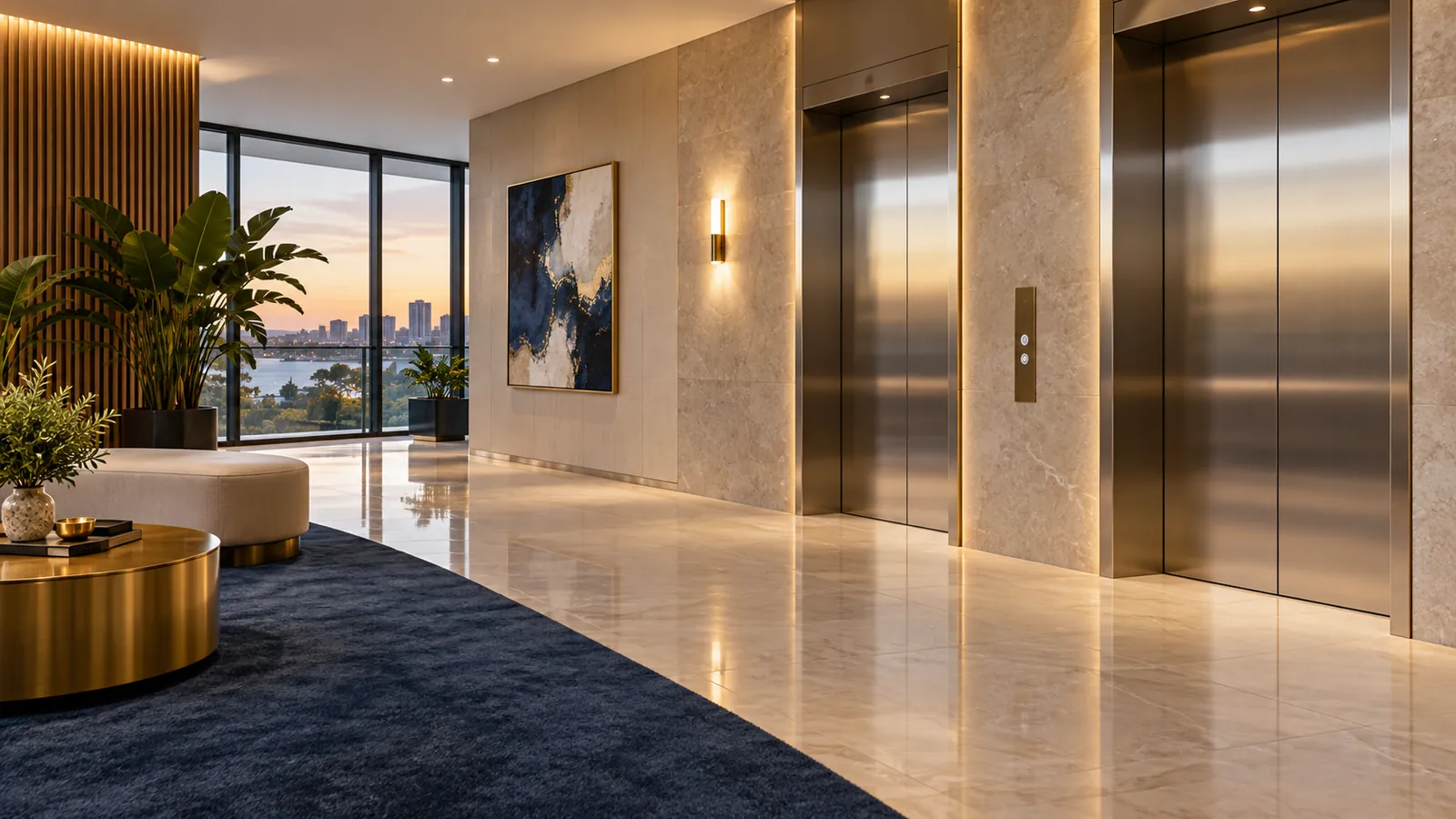
Residential strata cleaning result: polished lift doors and a clean lift lobby in a Melbourne apartment building
G to topevery common level
Photosafter each visit
Quiethours agreed first

This page is for owners corporation committees, strata managers and building managers looking after homes rather than offices. The work looks simple from the outside. A cleaner comes in, mops the foyer and leaves. The difference between a building that feels cared for and one that attracts complaints sits in the details: the lift tracks, the fire stairs nobody walks, the mail area on parcel day, the smell by the chute door on level four.

We clean apartment towers, mid-rise blocks, 1960s walk-ups and townhouse groups across Melbourne, and after each visit the committee gets dated photos of every area we touched, so nobody has to inspect the building to know it was done. Residential cleaning is one of several scopes we run under one contract. For the full list, including windows, gutters and carpets, see our strata cleaning services overview.

Sample photo reportFour of the photos a committee receives after a weekly visit. Layout shown as an example.

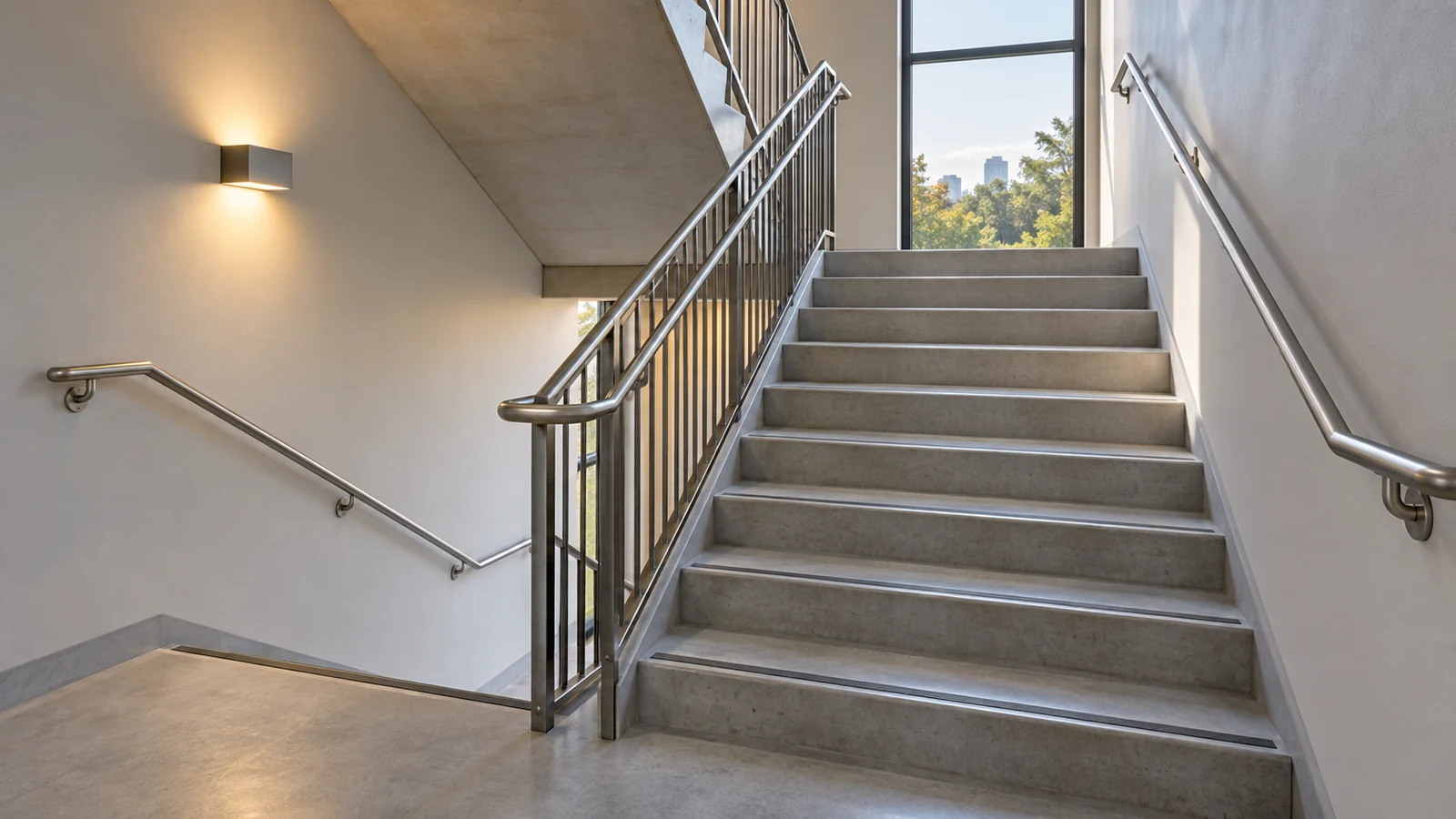
Fire stair swept and handrails wiped during a residential strata clean
Fire stair, L2 to L3 7.52
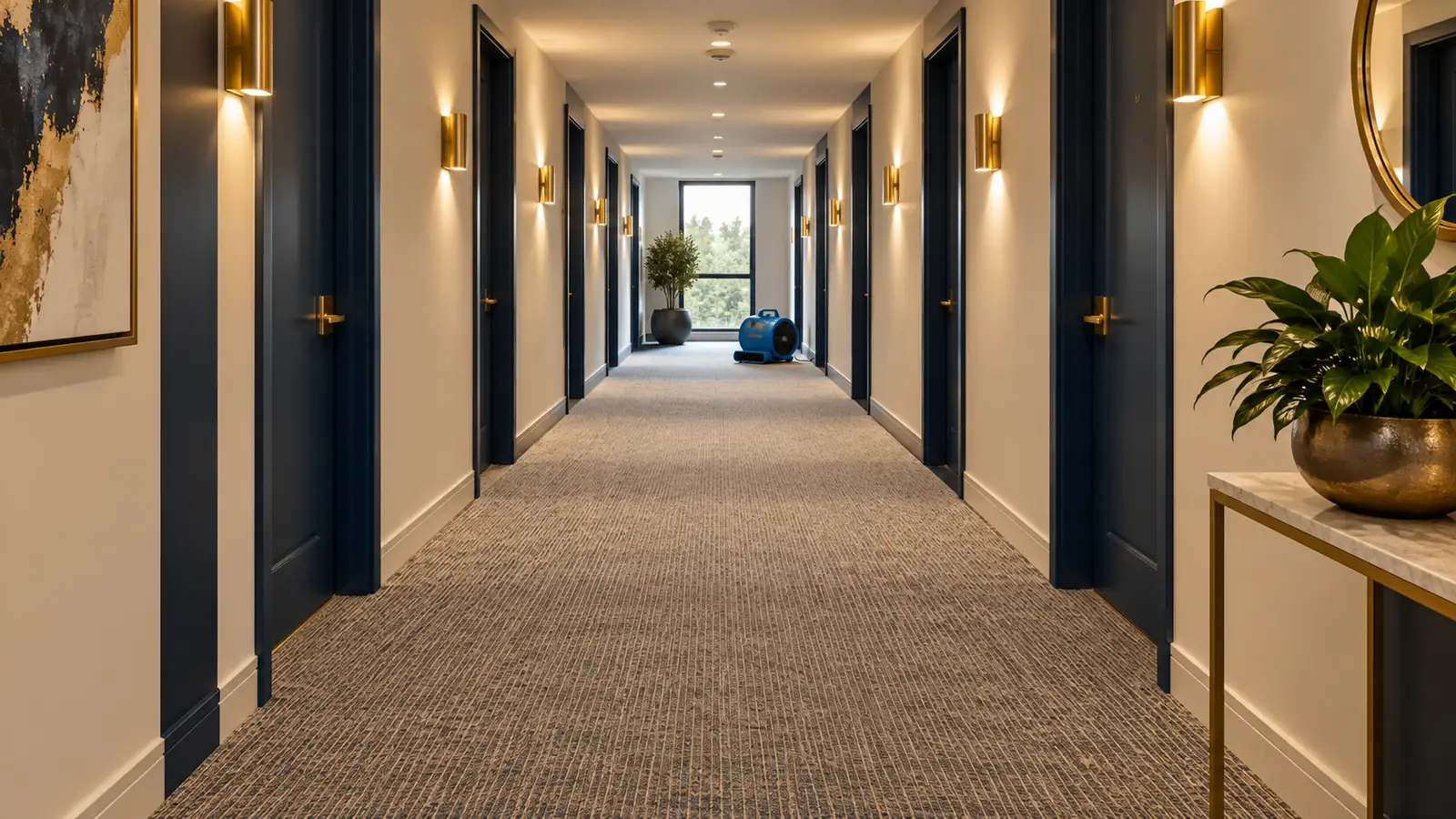
Apartment corridor vacuumed to the skirting on a weekly visit
Corridor, L4 8.20
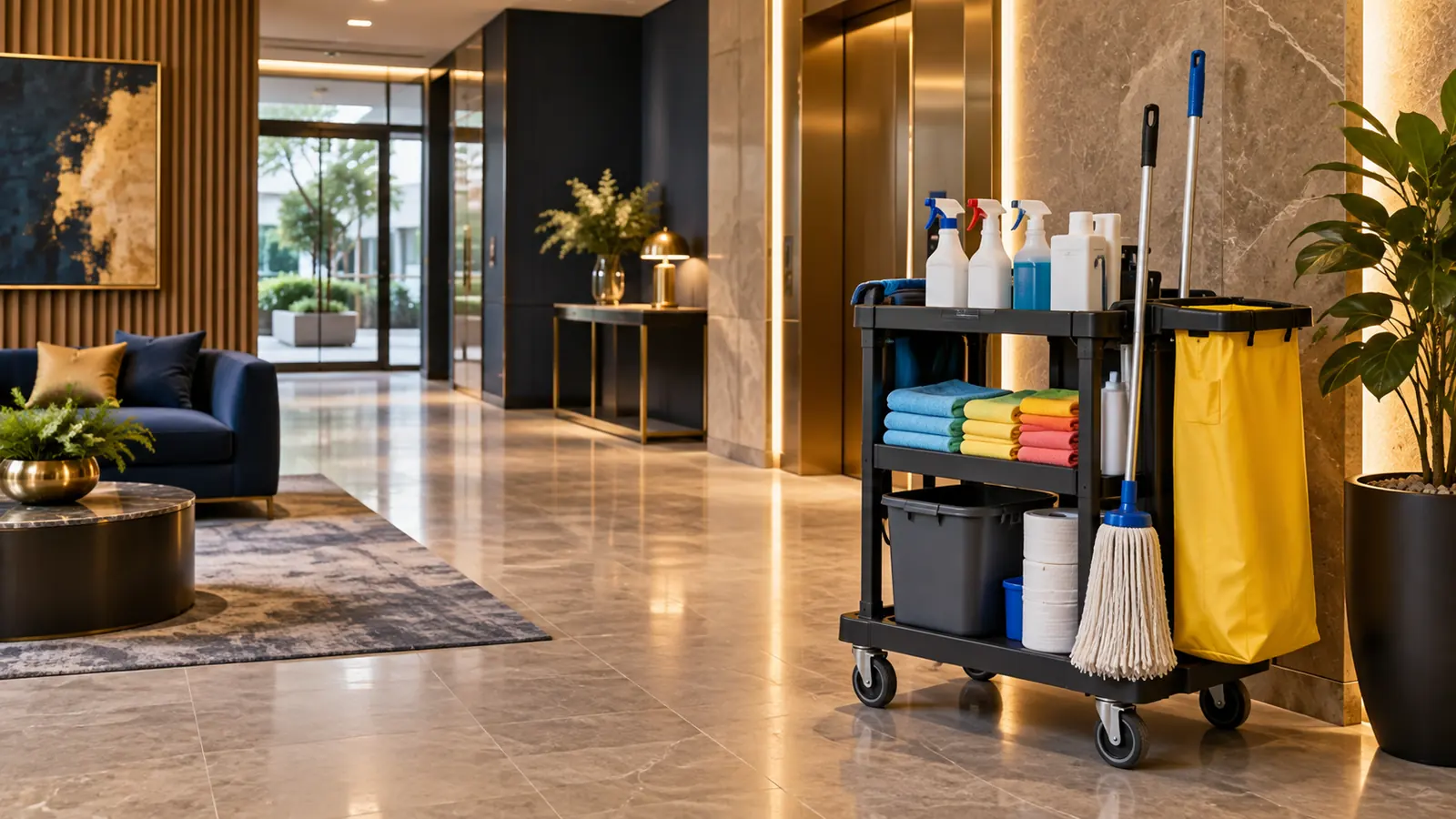
Cleaning trolley set up in an apartment lobby before the entry clean
Lobby and entry 8.45
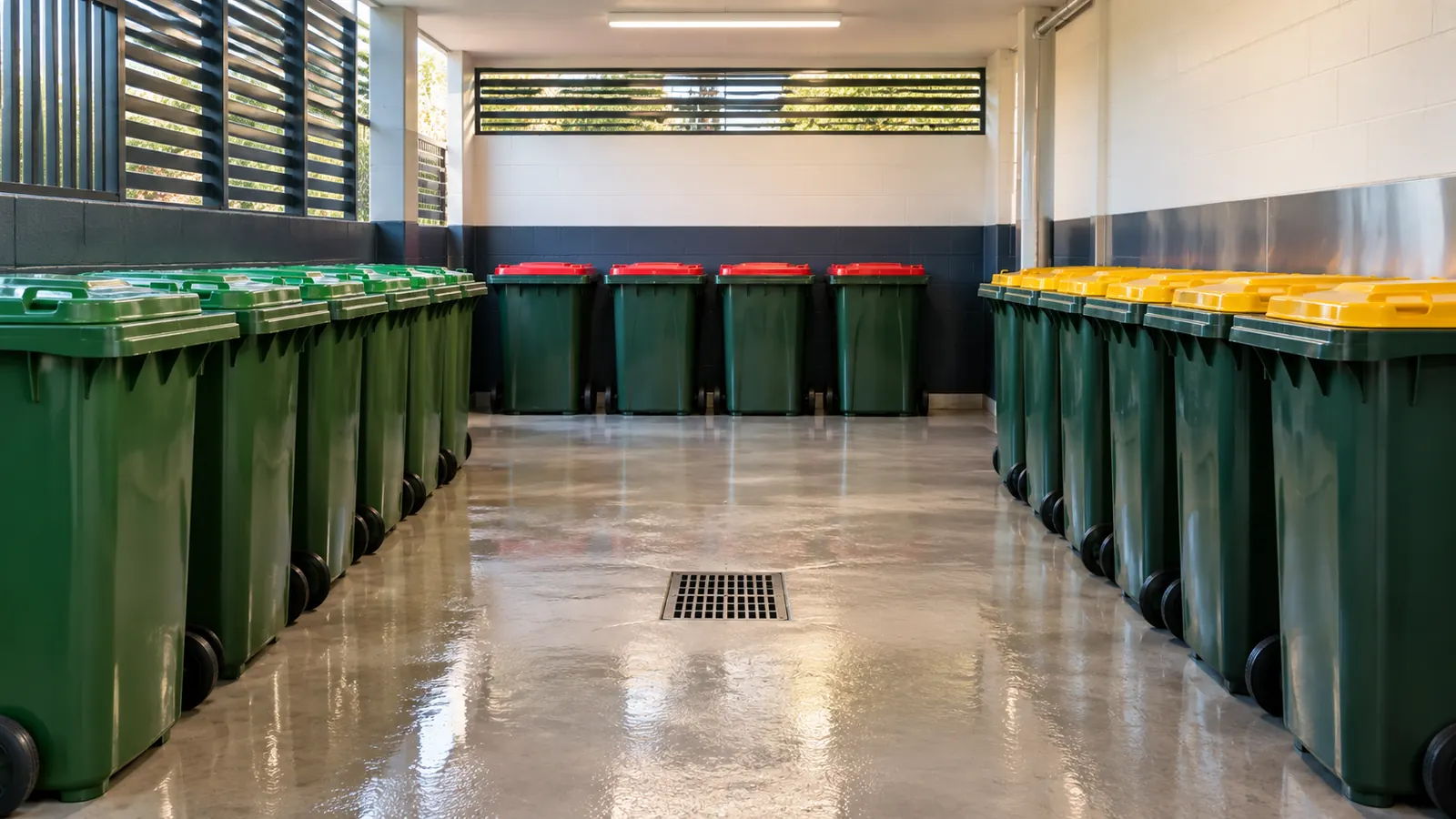
Residential bin room floor washed with bins lined up
Bin room 9.05

01Scope

What is included in residential strata cleaning?

In a residential scheme we look after the shared living spaces: entries and foyers, lift cars and landings, fire stairs, corridors, mail and parcel areas, and amenities such as laundries, gyms and pool decks. Private apartments and townhouses are not included. That, in short, is the scope of residential strata cleaning.

The table below is how we split a typical apartment building into what gets done on every visit and what is done on a slower cycle. Your building will differ, which is why we walk it before pricing anything.

A typical residential checklist
AreaEvery visitMonthly or quarterly
Entry and foyerGlass doors, floor, mats, intercom panel, letterbox frontsSkirting boards, light fittings, door closers wiped
LiftsCar walls, mirror, buttons, floor, door tracks at the main levelTracks on every level, stainless steel treatment
Fire stairsSwept or mopped, handrails wiped, items left there reportedLanding windows, cobwebs, stair nosings scrubbed
CorridorsVacuumed or mopped, spot marks on walls and doorsEdges and corners detailed, vents dusted
Mail and parcel areaFloor, benches and the rubbish left by packagingLetterbox fronts polished, noticeboard tidied
AmenitiesLaundry benches, gym surfaces, pool deck furniture wipedGym equipment detailed, deck hosed and scrubbed

Stairs, lifts and foyers are named as common property by Consumer Affairs Victoria, which is why they sit with the owners corporation. Garden edges, paths and bin areas are often in scope too, and bins get their own routine on our bin room and waste area cleaning page. Melbourne's residential stock adds its own quirks. Terrazzo stairs in older St Kilda and Hawthorn walk-ups need a neutral cleaner or they dull. Towers in Southbank and Docklands often have separate lift banks for low and high floors, plus a carpark lift that sees the most grit of all. We write those details into the checklist rather than leaving them to a new cleaner's memory.

If you are writing a tender, our strata cleaning scope and schedule template gives you an editable version of this table.

Source: Consumer Affairs Victoria, owners corporation definitions.

02First impressions

Why do lobbies and lifts matter most?

Lobbies and lifts are the spaces every resident, visitor, tradesperson and buyer passes through, so they set the building's reputation. A smeared lift mirror or gritty foyer floor gets noticed within a day, while most other areas can go a week before anyone looks.

Here is what a visitor actually sees in the first seconds after walking in, and what we do about each.

  1. 0 to 3 s

    The front door glass and handle. Cleaned on every visit, both sides, including the push plate that collects fingerprints fastest.

  2. 3 to 6 s

    The foyer floor and entry mat. Mats are lifted and the grit underneath removed, because that grit is what scratches stone floors.

  3. 6 to 10 s

    The lift doors and call button. Stainless steel is wiped with the grain so it does not streak under downlights.

  4. Inside

    The lift car: mirror, handrail, buttons, floor and the door track where dirt and small stones collect.

Lift tracks deserve a mention of their own. Committees often tell us their last cleaner never touched them, and a packed track makes doors noisy and can trigger a service call. We clear the main-level tracks each visit and the upper levels on a monthly round.

Where a building has a concierge or building manager on site, we agree a short handover at the start of each visit: anything spilled overnight, a removalist booking that will tie up a lift, a delivery pallet in the foyer. Five minutes of talking saves an hour of cleaning in the wrong order.

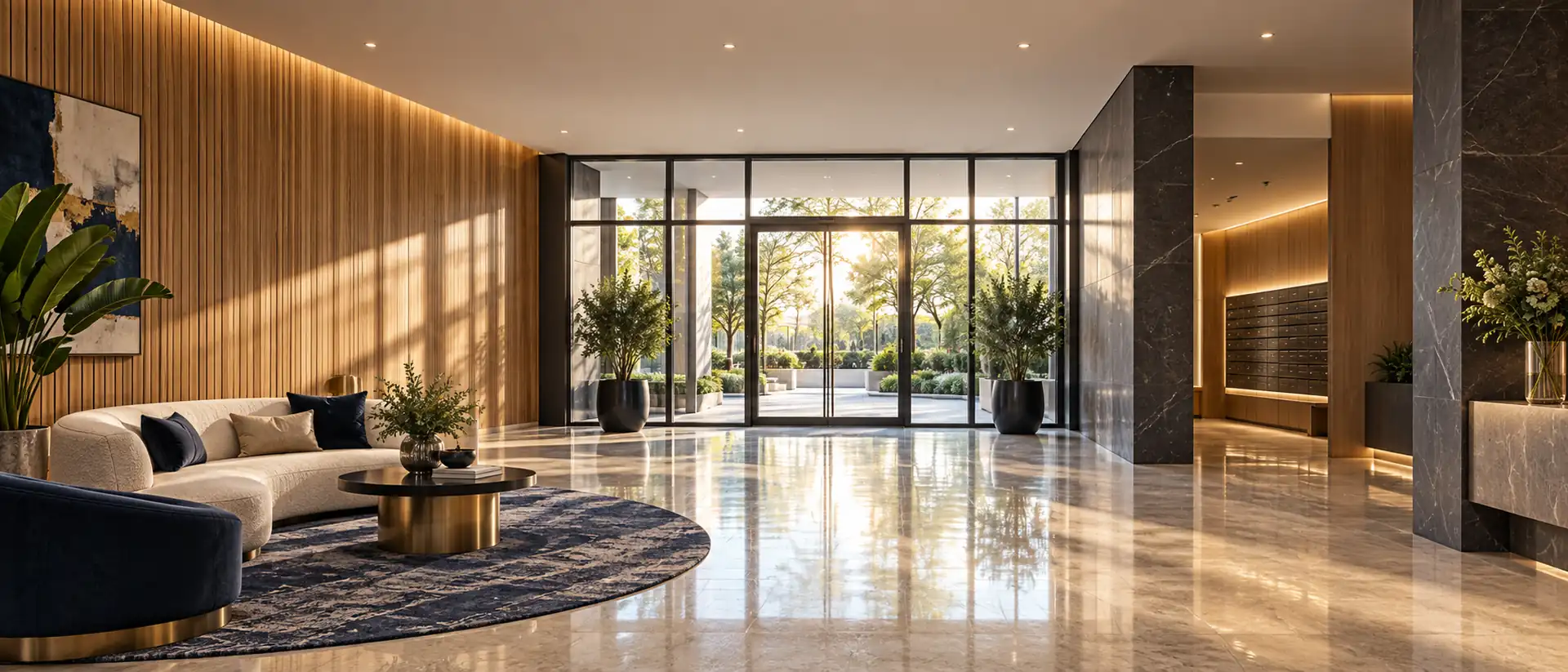
Apartment building lobby with clean stone floor and entry glass after residential strata cleaning

03The skipped scope

Why do fire stairs get missed, and how do we check them?

Fire stairs get missed because few residents use them, so nobody complains until something goes wrong. We treat them as a full part of every visit, working top to bottom, and photograph each flight so the committee can see they were done.

In most mid-rise buildings the fire stairs are also the route people take in an emergency. Dust, dropped rubbish and a slippery landing are more than a presentation problem there. So is storage. Bikes, boxes and old furniture have a way of appearing on landings, and we report every item to the manager the same day with a photo and the level it is on.

Walk-ups without a lift are the opposite case: the stairs are the only way up, so they carry every resident, every delivery and every moving box. In those buildings the stairwell gets the same attention as a foyer, including the skirting and the wall where shopping bags rub.

Stair treads in concrete buildings also collect a fine grey dust from the walls and ceilings, which is why a quick sweep is not enough on its own. We damp mop the treads after sweeping and scrub the nosings on a monthly cycle.

  1. 01
    Treads and nosings

    Swept, then damp mopped. Nosings scrubbed monthly so they stay visible.

  2. 02
    Handrails

    Wiped end to end on every flight, not just the ground floor section.

  3. 03
    Landings and windows

    Cleared of grit and cobwebs; landing glass done on the monthly round.

  4. 04
    Doors and signage

    Push bars and exit signs dusted, faulty closers reported.

  5. 05
    Anything stored

    Photographed and sent to the manager, never moved or thrown out by us.

04Shared spaces

How are corridors, mail rooms and shared amenities cleaned?

Corridors are vacuumed or mopped on each visit with edges and doors spot cleaned, mail rooms are cleared of packaging and wiped down, and amenities like laundries, gyms and pool decks are cleaned to a checklist agreed with the committee. Each space has its own problem to solve.

Corridors

Traffic runs in a narrow line from the lift to each door, so wear shows in a stripe. Weekly vacuuming with the edges done by hand keeps the whole width even, and hard-floor corridors get a damp mop with a neutral cleaner that will not leave a film.

  • Scuffs on doors and walls
  • Vents and light switches
  • Hot water extraction booked separately

Mail and parcel areas

Online shopping has made these the messiest rooms in many buildings. Cardboard, tape and plastic pile up between collection days.

  • Packaging cleared to recycling
  • Benches and shelves wiped
  • Parcel rooms entered only as agreed

Laundries, gyms and pool decks

Amenities are used at all hours and noticed when they are not clean. We wipe and sanitise surfaces, not the pool water itself.

  • Gym handles, benches and mats
  • Laundry lint traps and benches
  • Pool deck furniture and edges

Hard rubbish is the other recurring corridor problem. A mattress or broken chair left by the lift is not ours to throw out, because it belongs to someone and council collections have their own booking rules. We photograph it, note the level and pass it to the manager, who can contact the owner or book a collection.

The three complaints we hear most when a committee changes cleaners. First, fire stairs that were clearly never touched, with the same bottle on the same landing for months. Second, sticky lift tracks and a lift floor that looks clean from the door but not from inside. Third, entry glass cleaned on one side only, so the smears show every afternoon when the sun hits the door. None of these is hard to fix. They just need to be on the checklist, done in order, and photographed so they cannot quietly drop off.

Pool water chemistry and gym equipment servicing belong with specialists, and we will say so rather than quote for them. What we do is make sure the room around them is clean and ready for residents in the morning.

05People at home

How do cleaners work around the people who live there?

By agreeing quiet hours, keeping wet floors signed and passable, protecting parcel security and staying out of the way. Residents should notice a clean building, not a cleaning crew. Our crews follow the same four rules in every residential scheme we look after.

01
Quiet hours first

Machines and blowers only inside the hours in your building rules, never early on weekends.

02
Wet-floor discipline

Signs go down before any mopping starts, and half of each corridor or stair stays dry.

03
Parcel security

We never sign for, move or store residents' deliveries. Parcel rooms are entered only as the manager directs.

04
Privacy in photos

Report photos show spaces, not people, apartment numbers or names on the intercom.

Older residents and families with young children notice different things. A committee in a building with many retirees may ask for fragrance-free products in the lifts; a family-heavy block may care most about the playground edge and the pram parking area. We record these preferences on the checklist so they survive a change of crew.

Keys and fobs are handled the same way in every building. Each one is logged on a signed register, carried by a named supervisor and never labelled with the building address. New crew members are inducted on site by that supervisor before they work alone, so they know where the isolation switches, the cleaner's cupboard and the no-go areas are.

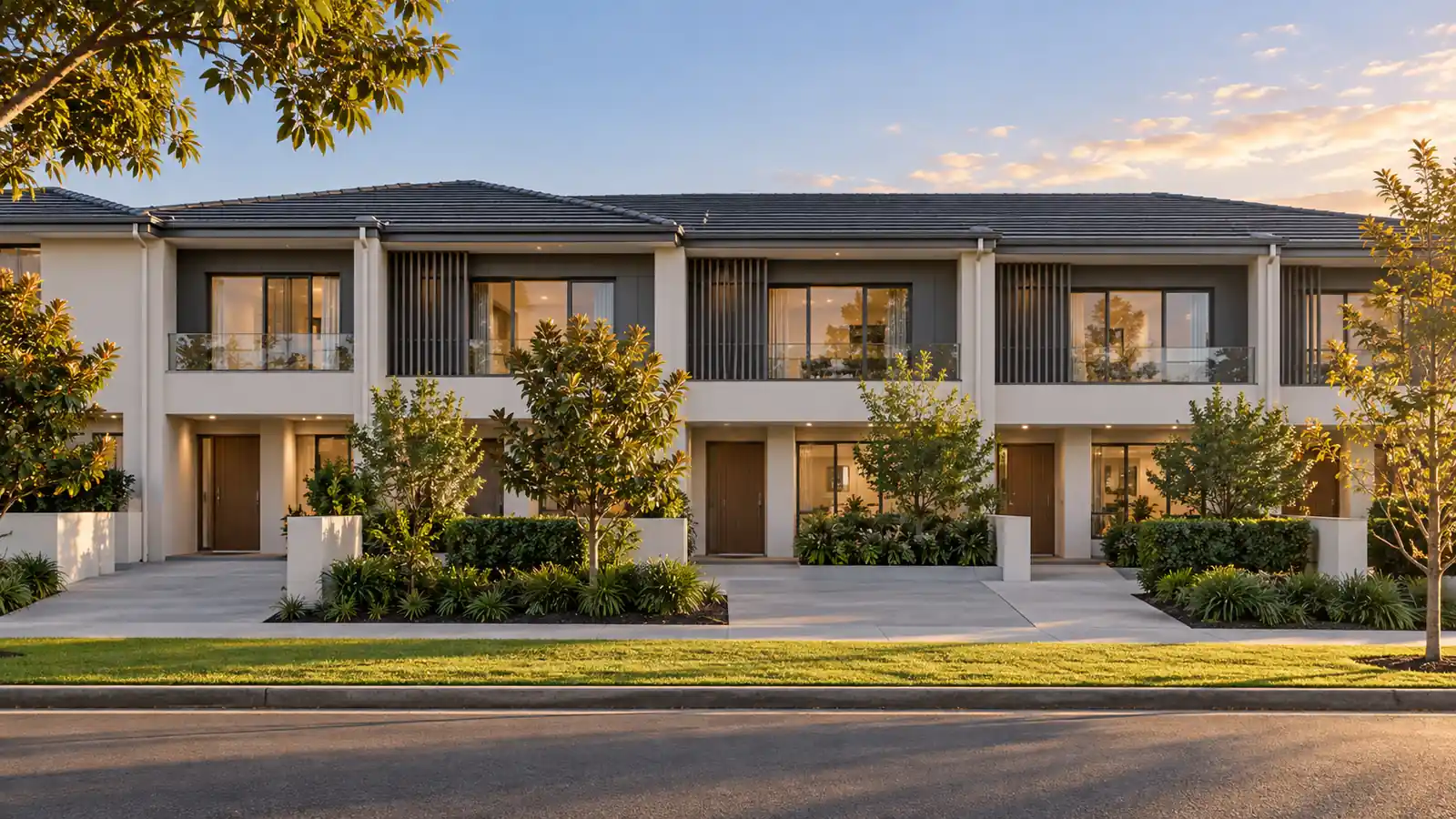
Townhouse scheme with a swept shared driveway and tidy entries

06Small schemes

What does townhouse and small-scheme cleaning look like?

Townhouse and small-scheme cleaning is mostly outdoor work on whatever the owners share, typically a driveway, a few guest car spaces, the letterboxes, a bin enclosure and some paths. Visits are usually fortnightly or monthly, and the price reflects that smaller scope rather than a minimum fee designed for apartment towers.

  • Driveway and visitor bays swept, leaves and litter removed
  • Letterbox bank and entry signage wiped down
  • Bin bay washed, overflowing bins reported
  • Paths and garden edges tidied where they are common property

Townhouse owners also tend to notice different things from apartment residents. The first complaint is rarely dust; it is leaves blocking a garage door, a letterbox bank covered in junk mail, or a bin enclosure that smells in summer. Our small-scheme checklist starts with those.

Many small schemes run without a manager, and the owners take turns dealing with contractors. We keep it simple for them: one visit schedule, one short report and one invoice a month. Periodic jobs, such as a gutter clean or a driveway wash, are priced separately so owners can see exactly what they are paying for.

A three-lot group with a short driveway will pay far less per visit than a twenty-lot group with a long one. We quote from what is actually there, and we will tell a small group honestly if a quarterly tidy plus a yearly driveway wash would serve them better than a monthly visit.

07Frequency

How often should a residential scheme be cleaned?

Most apartment buildings need a visit every week, larger ones two or three times a week, and towers daily. Townhouse groups often manage with fortnightly or monthly visits. The right frequency depends on traffic through the entry, not the lot count alone.

Visit frequency we usually recommend
SchemeWhat drives itRoutine visits
Townhouses, up to 20 lotsOutdoor areas, leaves, bin bayFortnightly or monthly
Walk-up, 10 to 40 lotsStairwells and a single entryWeekly
Mid-rise, 40 to 120 lotsLifts, corridors, parcel trafficTwo or three a week
Tower, over 120 lotsConstant entry and lift useDaily or near daily

Seasons change the picture as well. Autumn brings leaves into every foyer in tree-lined suburbs, and a wet Melbourne winter means muddy tracks from the carpark lift to the front door. Some schemes add an extra visit a week from May to August and drop back in summer.

We review frequency after the first three months using the photo reports. Sometimes a building needs more on Monday after a busy weekend and less on Thursday. Buildings that want routine cleaning combined with globe changes, graffiti removal and defect reporting can move onto one of our strata cleaning and maintenance programs.

08Prices

What does residential strata cleaning cost?

It costs whatever the building needs in hours per visit, times the number of visits, at award-based labour rates. A walk-up with one stairwell is quick; a tower with four lifts and a gym is not. We give a fixed monthly figure after a walk-through rather than a guess over the phone.

The things that move a residential price most are the number of levels, the number of lifts, whether corridors are carpeted or hard floor, and how many amenities are in scope. Early-morning and weekend work costs more because award penalty rates apply outside ordinary hours.

When comparing quotes, divide each price by the hours on site it assumes. A cheap quote often buys an hour less per visit, and that hour is usually the fire stairs. Our page on strata cleaning cost shows worked examples by building size.

Every residential quote we send lists the areas, the hours on site per visit, the visit days and the periodic jobs, each as its own line. If the committee decides to drop the gym from scope or add a Saturday visit, the change is easy to see and easy to price.

Illustration of residential strata cleaning prices rising with building size

What moves the price most

  • Levels and stairwellsLargest effect
  • Number of liftsHigh
  • Carpet or hard floorMedium
  • Amenities in scopeMedium
  • Visit time of dayLow to medium

09Your quote

What should you send us to price your building?

Send us the lot count, number of levels and lifts, the suburb and the areas you want cleaned. We book a walk-through with whoever holds the keys, then send a fixed quote itemised by area, ready for the committee's next meeting.

Photos of the foyer, a typical corridor and the bin room help us arrive prepared, but they are not essential. If the committee already has a scope from a previous contractor, send that too. We will price it as written and tell you honestly if something on it is missing or unnecessary. You can also get a quote through the full form, which takes photos and building plans. For how we work across the whole city, see strata cleaning Melbourne.

10Questions

What do committees ask about residential cleaning?

Three questions we hear on almost every residential walk-through.

How often should an apartment lobby be cleaned?
An apartment lobby should be cleaned at least weekly, and two or three times a week once a building passes about 40 lots. Towers with a concierge usually need a daily clean. Entry glass is the part that shows first, so it is done on every visit regardless of size.
Do you clean fire stairs every visit?
Yes. Fire stairs are swept or mopped and the handrails wiped on every routine visit, from the top level down. Landing windows and nosings follow a monthly cycle. Anything stored on a landing is photographed and reported to the manager, because stairs are an exit route and should stay clear.
Can you clean our gym and pool deck?
Yes, we clean gym surfaces, benches, mats and handles, and wipe down pool deck furniture and edges. We do not treat pool water or service gym machines, which need licensed or specialist providers. Those items stay with your existing contractors and we work around their visits.