

Skip to content

OC · StrataCommon property cleaning for Melbourne owners corporations and body corporates

SServices hub

Strata Cleaning Services: The Complete Breakdown

Strata cleaning services cover every part of a building that the owners share, and this page sets all of them out in one place: what each scope includes, how often schemes book it and how the work is priced. It is written for committee members, strata managers and building managers weighing up options before a meeting.

  • Nine scopes, one contract
  • Every owners corporation tier
  • Quotes itemised per scope
Cutaway illustration of the common property zones that strata cleaning services cover, from roofline to basement
9common-property scopes
1contract and invoice
R to B2roofline to basement

We are a Melbourne strata cleaning company, so everything here reflects how Victorian schemes run. The owners corporation holds the contract, the committee or its manager gives instructions, and the levies pay for the work. If you manage buildings in another state, the scopes will look familiar even though the legal terms change.

Each service below links to its own page with the detail a committee needs before it approves anything. Very few schemes need all nine. A four-lot townhouse group might book a monthly visit, a gutter clean and a yearly driveway wash. A 200-lot tower might need a cleaner on site every day plus the full periodic calendar. The value of a single provider is that you can add or drop a scope at renewal without running a fresh tender. For the local overview, including the suburbs we cover and how our visit reports work, start with strata cleaning Melbourne.

01The full list

What do strata cleaning services include?

Strata cleaning services include the routine cleaning of shared indoor areas, the upkeep of bin rooms and basements, and periodic work on glass, gutters, hard surfaces and carpets. Together they cover the common property an owners corporation is responsible for keeping in good condition.

In Victoria, common property is whatever the plan of subdivision does not set aside as a lot. The official examples run from foyers, lifts and stairs out to driveways, fences and garden areas. Here are the nine scopes we group that work into.

Two things sit outside the list. The first is anything inside a private lot, which the owner arranges. The second is work that needs a licensed trade, such as plumbing or electrical repairs, which we report rather than attempt. Schools and childcare centres held on strata titles occasionally ask about cleaning too; we take those on only as part of a wider scheme contract.

Source: Consumer Affairs Victoria, owners corporation definitions. General information only, checked September 2026.

02Why it is different

How is strata cleaning different from office cleaning?

Office cleaning answers to one tenant with one budget. Strata cleaning answers to a group of owners who share the cost through levies, approve the contract as a committee, and live or work in the building while the cleaners are there.

Office cleaning and strata cleaning side by side
QuestionOffice cleaningStrata cleaning
Who signs the contractThe tenant or its facilities managerThe owners corporation, through its committee or manager
Who paysOne business budgetEvery lot owner, through levies set at the AGM
Who notices a missStaff on Monday morningResidents, visitors and buyers at open inspections
When the work happensAfter hours, in an empty buildingAround people's homes, quiet hours and bin nights
How changes get approvedAn email to the account managerA committee resolution or a delegated manager decision

That last row catches out cleaners who come from office work. A committee can only act within the powers the owners corporation gives it, and bigger decisions go to a general meeting. Tier 1, 2 and 3 owners corporations must elect a committee at each AGM, and many hand day-to-day contractor matters to their manager. We work either way: with the manager when authority is delegated, and with the committee chair when it is not.

Residents are the other big difference. Machines are loud, a wet floor is a real hazard for an older owner collecting mail, and any photo taken inside a home building needs care. Office crews rarely have to think about any of it; a professional strata cleaning crew thinks about it on every visit.

Money works differently too. Because cleaning is paid from levies, the budget is usually set a year ahead at the AGM, and a mid-year price rise can mean a special meeting. That is why we fix prices for the contract term and flag any change well before the budget is drafted.

Committee rules: Consumer Affairs Victoria, tiers of owners corporations.

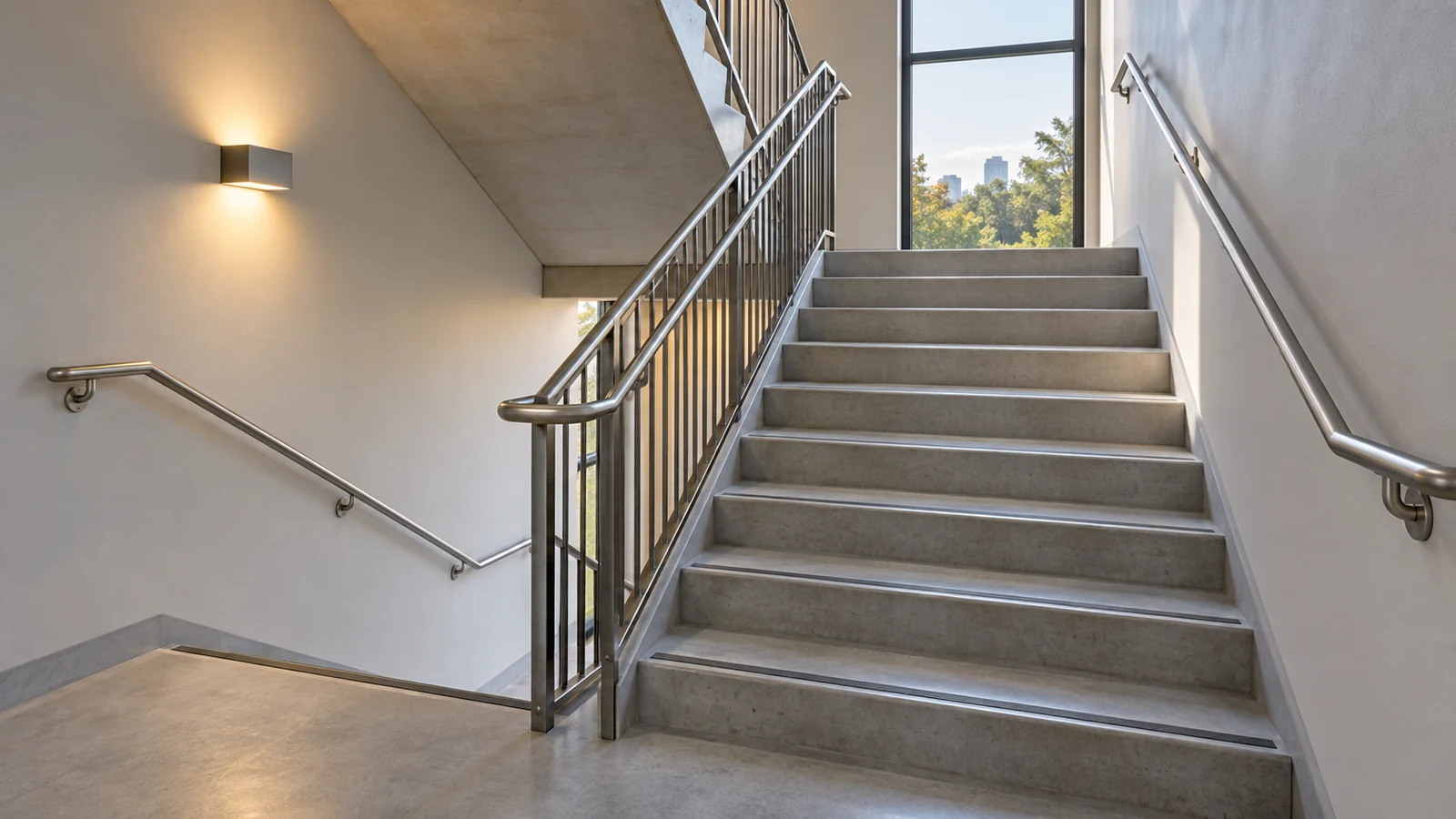
Swept concrete fire stairs and clean handrails in a residential strata building

03Homes

What does residential strata cleaning cover?

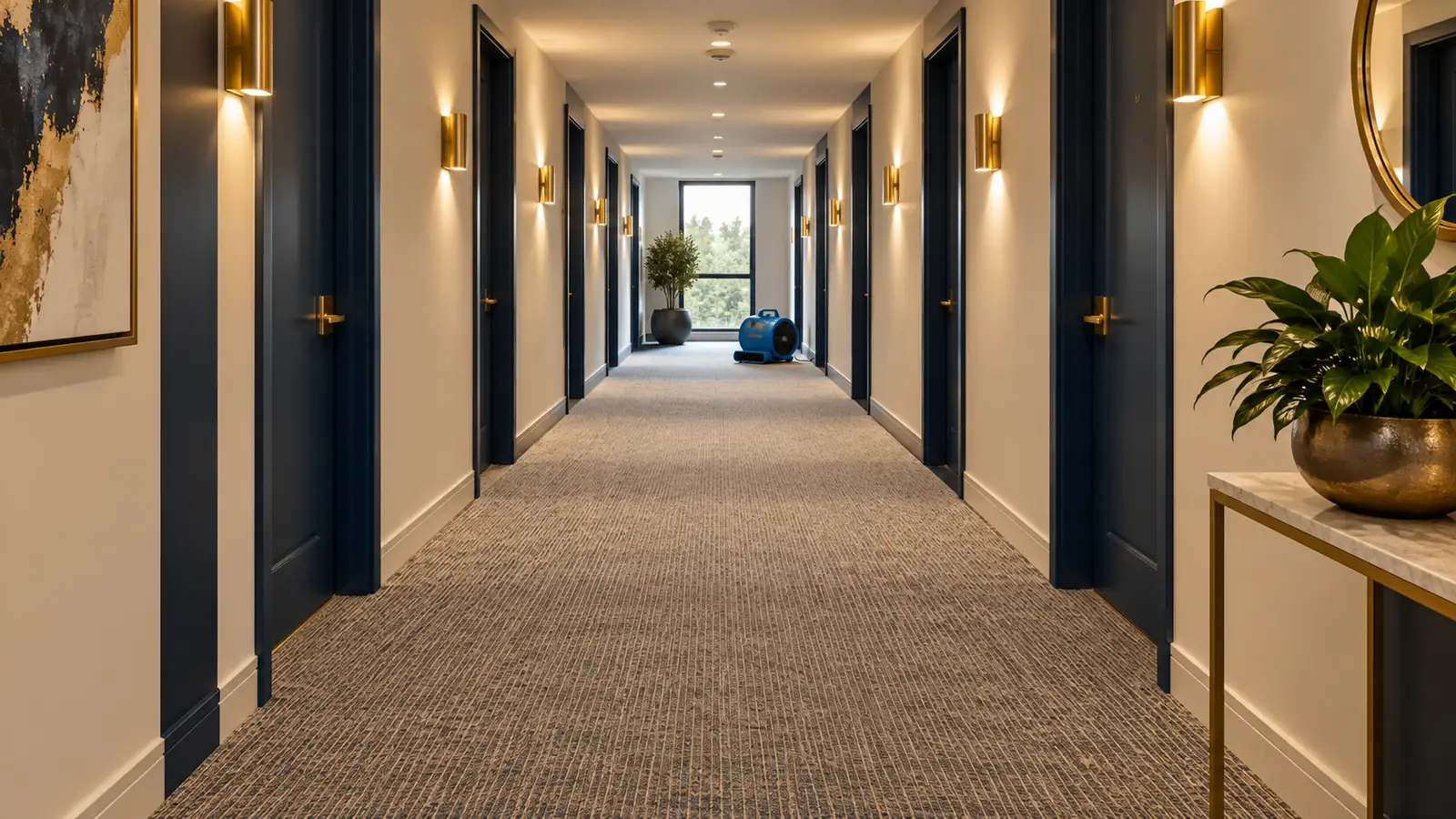
Residential strata cleaning keeps the shared parts of apartment and townhouse schemes clean on a fixed round: entries, mail areas, lifts, corridors and fire stairs indoors, and driveways, letterbox banks and bin bays outside. How often we visit follows the number of lots and how busy the entries get.

  • Entry doors, intercom panels and mailbox fronts
  • Lift cars, landing doors and floor tracks
  • Fire stairs, handrails and landing windows
  • Shared laundries, gyms and rooftop terraces where a scheme has them

Brick walk-ups from the 1960s and 70s tend to have narrow stairs, no lift and a shared laundry. Newer buildings bring concierge desks, residents' gyms and podium gardens. Townhouse groups are simpler indoors but busier outside, with leaves on the driveway, junk mail around the letterboxes and bins left out after collection day. We write the checklist for the building you actually have, and you can see how our residential checklists are structured before you ask for a price.

Where owners are sensitive to noise or smell, we agree hours and products at the start. Fragrance-free products in lifts and corridors are a common request in schemes with older residents, and switching does not change the price.

04Shared addresses

What changes for commercial and mixed-use strata?

Commercial and mixed-use strata need cleaning timed around trading hours and tenant traffic, with amenities and loading areas added to the usual common property. Where retail, office and residential owners share a building, costs often have to be split by area to match each group's lot liabilities.

  • Shopfronts and podium walkways cleaned before opening
  • Daily amenities and kitchenettes in office strata
  • Loading dock and commercial bin area on their own frequency
  • Separate invoices where a site has more than one owners corporation

Strata office parks, medical suites and small industrial units belong here too. Each has its own peak times and its own idea of clean, and a medical suite will expect more attention on touch points than a warehouse unit. The timing and invoicing detail is set out on our page on office, retail and mixed-use strata.

Mixed-use buildings also carry more than one set of expectations. Retail tenants may have lease terms about how the shopfront presents, while residents care most about the lobby at night. We note both in the schedule so neither group is caught out.

Mixed-use strata entry with a clean retail podium ahead of trading hours

05One calendar

What is a strata cleaning and maintenance program?

A strata cleaning and maintenance program joins routine cleaning to the small, regular building jobs that otherwise fall between contractors. It runs on a twelve-month calendar that the committee approves once, is billed monthly, and is reported visit by visit.

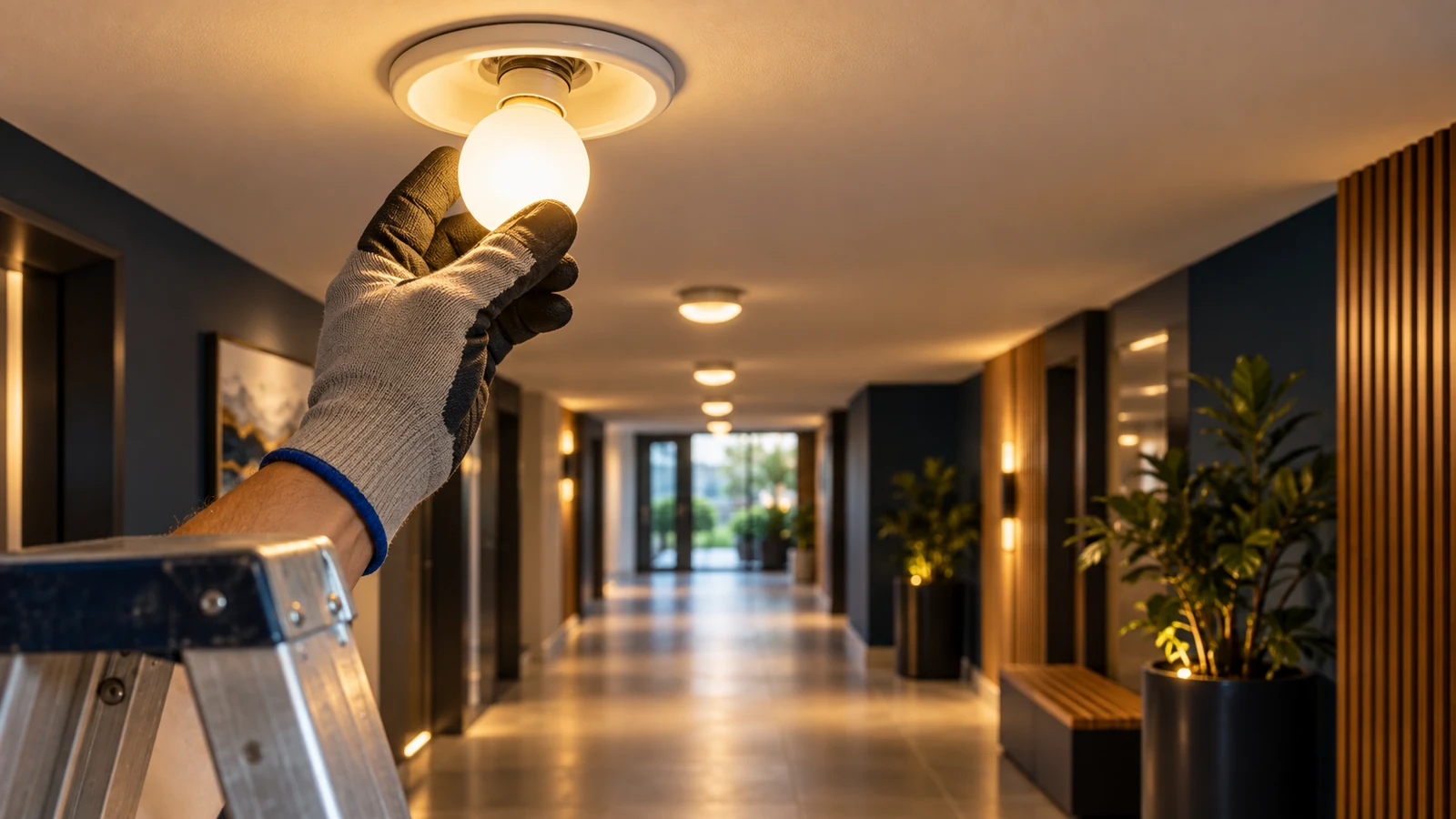
Light globes

Common-area globes swapped during the round and noted in the report.

Graffiti and stickers

Removed from walls, doors and letterboxes before they spread.

Defect reporting

Anything that needs a trade is photographed and sent to the manager that day.

Periodic scheduling

Gutters, glass, carpets and hard surfaces booked in a sensible order.

The largest schemes, tiers 1 and 2, are required to keep a maintenance plan, and a program sits comfortably inside it. Read how a program is set up and reviewed each year.

At each review we look back over twelve months of reports with the manager: which areas needed more time, which periodic jobs could move, and whether visit frequency still matches how the building is used.

Gloved hand replacing a light globe in a strata corridor during a maintenance round
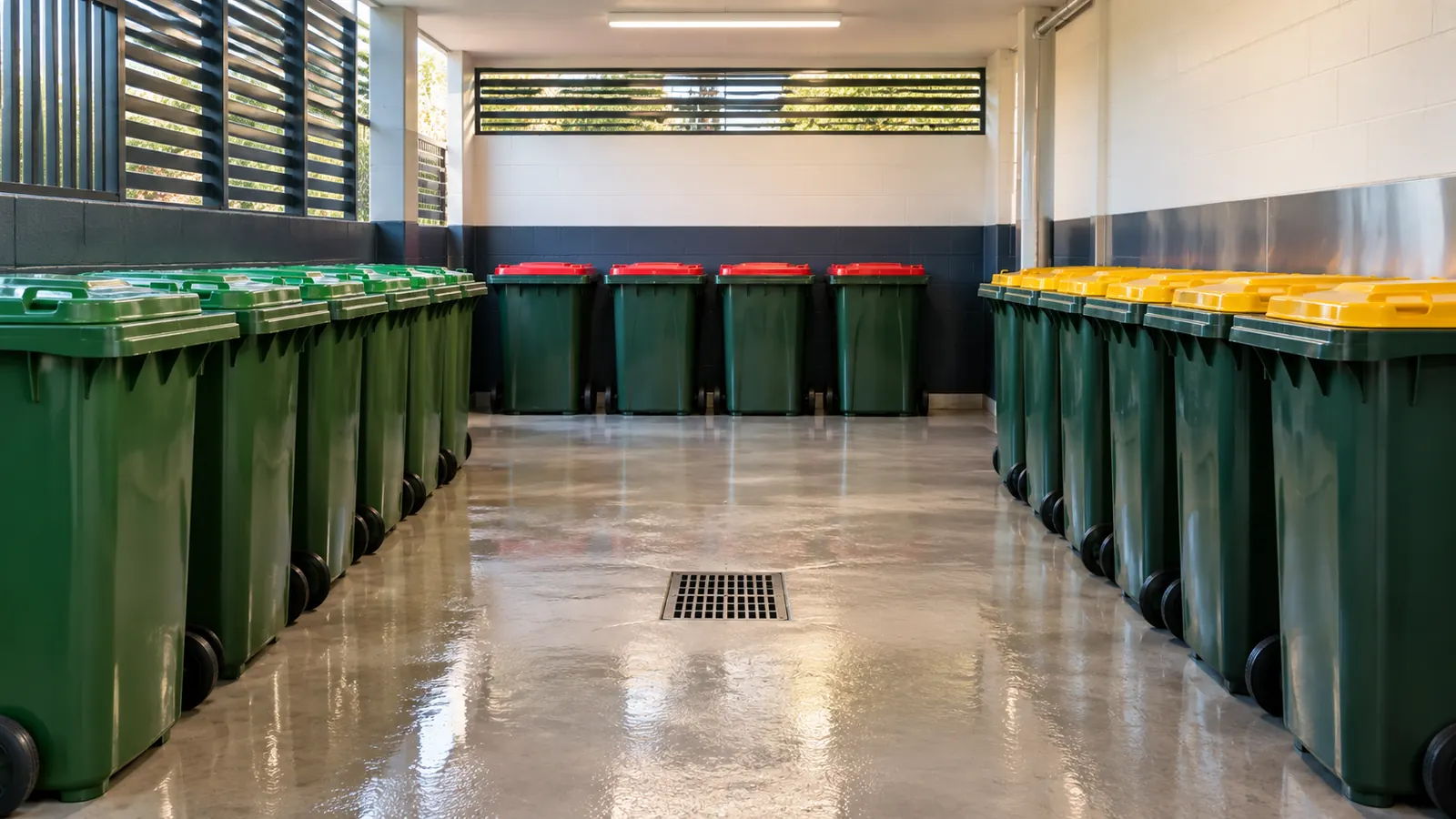
Hot-washed strata bin room with colour-coded bins lined up and a clear drain

06Waste

How are bin rooms and waste areas cleaned?

We wash the bins, hot wash and degrease the floor and lower walls, clear the floor drain and deodorise the room. Chute hopper doors on each level are wiped on the same visit, because that is where the smell travels from.

Weekly suits most apartment buildings; fortnightly suits small schemes with an open-air bin bay. Extra washes in January and February stop a fly problem before it starts. The full routine is on the bin room cleaning page.

We also note overflowing bins, dumped furniture and wrongly sorted recycling in the report, so the manager can raise it with residents or the council collection service.


Basement carpark aisle machine scrubbed under strip lighting

07Basements

What does carpark and basement cleaning involve?

It means sweeping aisles and ramps, machine scrubbing the floor, treating oil stains, clearing drains and pits, and cleaning the basement lift lobbies and stair doors. Dust and litter are taken away rather than pushed to the back wall.

A monthly sweep with a quarterly scrub is the usual pattern. Residents get written notice before each scrub so cars can be moved out of the aisles. See basement and carpark routines for more.

Basement lift lobbies and stair doors are the first thing residents see after parking, so they get attention on routine visits, not just on scrub days.

08Periodic work

Who handles windows, pressure cleaning, gutters and carpets?

The same company that does the routine clean can handle all four periodic scopes, booked into one calendar and shown as separate lines on the quote. That keeps access, insurance and reporting in one place and lets the jobs run in the right order.

  • Streak-free glass balustrades on a strata apartment walkway

    Window cleaning

    Entry glass on each routine visit; facade windows, balustrades and skylights by water-fed pole, or by height-access partners on taller buildings.

    Quarterly or twice a year
  • Algae being removed from a shaded strata entry path

    Pressure cleaning

    Driveways, ramps, paths, courtyards and pool surrounds, with runoff kept out of the stormwater system.

    Late spring or summer
  • Clear gutters along a townhouse strata roofline

    Gutter cleaning

    Box and eaves gutters cleared by hand, downpipes flushed, waste bagged and removed from site.

    Autumn and spring
  • Apartment corridor carpet after hot water extraction

    Carpet cleaning

    Hot water extraction of corridor and lobby carpet, one level at a time so a dry route stays open.

    Every 6 to 12 months

Order matters with these four. Gutters come first, because whatever comes out of them lands on paths and driveways. Pressure cleaning follows once the roof is clear. Carpets go last, after the dusty outside work, so grit is not walked straight back into freshly extracted corridors. Glass fits around the weather, usually in a settled spell.

Roof and high glass work is planned as work at height. WorkSafe Victoria's guidance on SWMS for high risk construction work sets the two-metre fall threshold, and although cleaning a roof is maintenance rather than construction, we write the same document for it and attach it to the quote.

09Choosing

How do you choose a strata cleaning company?

Choose on evidence: current insurance, a written checklist for your building, a stated visit frequency, reports you can actually read and a quote that shows the hours on site. Price matters, but only once you know what it buys.

Strata cleaning companies vary widely in how they answer the questions below, and the answers tell a committee more than the price does. Put the same eight to every company you invite to quote.

  1. Can you show a current certificate of currency?A good answer is the certificate itself, attached to the quote, with the policy dates visible.
  2. How many hours per visit does this price assume?Look for a number. A vague reply usually means the hours will shrink once the contract starts.
  3. Who cleans our building, and does that change often?A regular crew learns the building's quirks. Constant rotation means the checklist is relearned every month.
  4. What does a visit report look like?Ask for a real sample with photos, dates and times, not a description of one.
  5. How do you handle keys, fobs and access codes?There should be a signed register and a clear process for returning everything at the end.
  6. What is the cover plan for leave and illness?Relief staff who have already been inducted on your site is the answer you want to hear.
  7. Which jobs would you hand to a licensed trade?An honest company names them: plumbing, electrical faults, lifts, fire equipment and pool water.
  8. How much notice is needed to end the contract?Thirty to ninety days is common. Be wary of long lock-in terms with automatic renewal.

A company that is sure of its service answers all eight without hesitating, and puts the answers in writing. Our guide on how to choose or switch a strata cleaning company goes through each one and what a weak answer sounds like.

10Pricing

How are strata cleaning services priced and quoted?

We price from the hours a building needs per visit, multiplied by how often we visit, plus a separate price for each periodic job. Every quote follows a walk-through, so the figure reflects your stairs, lifts and basements rather than a flat rate per lot.

Pick the building type closest to yours to see what a typical strata cleaning service looks like for it.

Routine scope
Driveway, visitor parking, letterbox bank, bin bay and entry paths.
Usual frequency
Fortnightly or monthly.
Often added
Gutters twice a year and a driveway wash each summer.
How we quote
A fixed fee per visit, with each periodic job priced on its own line.
Routine scope
Entry, stairwells and landings, shared laundry and the bin area.
Usual frequency
Weekly.
Often added
Gutters, external glass and stair carpet where fitted.
How we quote
A monthly fee for the weekly round, periodic work itemised.
Routine scope
Lobby, lift cars, corridors, fire stairs, bin room and carpark.
Usual frequency
Two or three visits a week.
Often added
Carpet extraction, quarterly carpark scrubs and facade glass.
How we quote
A monthly fee with a line for each periodic job and its month.
Routine scope
Lobbies, several lifts, amenities, podium areas and multi-level basements.
Usual frequency
Daily or close to it.
Often added
The full periodic calendar, planned around the maintenance plan.
How we quote
A monthly fee, split by owners corporation where the site has more than one.

Every quote we send has the same four parts, so committees can compare it against others line by line: the routine scope with hours per visit, each periodic job with its month and price, the documents a committee should hold (insurance, WorkCover, safe work method statements), and the notice period. Nothing is hidden in a general cleaning line.

Worked examples by building size are on our strata cleaning cost page. To start, get a quote with your lot count and scope, and tell us who can let our supervisor in to look around.

Arrange a site visit

11Questions

What else do people ask about strata cleaning services?

Four questions that come up when a committee first looks at bringing every scope under one provider.

What should a weekly strata clean include?
A weekly strata clean should cover the entry, mail area and glass, the lift cars and landings, corridors, fire stairs and handrails, plus a check of the bin room. Anything skipped should show up in the visit report, so the committee can raise it before it turns into a habit.
Can one company really do gutters and carpets too?
Yes, provided it has the equipment, the insurance and a safe way to work at height. Ask to see the safe work method statement for gutter jobs and the extraction machine used on carpets. We do both with our own crews and bring in licensed height-access partners only for tall facades.
How do committees usually engage a cleaner?
Most committees invite two or three companies to quote against the same scope, compare them at a committee meeting, then pass a resolution to appoint one. Larger schemes often leave the choice to their manager. Either way, the contract is signed on behalf of the owners corporation.
Do you clean schemes outside Melbourne?
No. We work across metropolitan Melbourne only, because routine strata cleaning depends on crews who can reach the building reliably every week. For schemes elsewhere in Australia, the scopes on this page still make a useful checklist when you invite local companies to quote.