Skip to content

OC · StrataCommon property cleaning for Melbourne owners corporations and body corporates

S02Commercial and mixed-use

Commercial Strata Cleaning for Mixed-Use Buildings

Commercial strata cleaning looks after the shared parts of office buildings, retail podiums and mixed-use towers held under strata title. The challenge is rarely the cleaning itself. It is fitting the work around shops that open early, offices that run business hours and residents who want quiet, all under one roof and one owners corporation.

OOffice suitesRRetail podiumsMMixed-use towersIStrata industrial

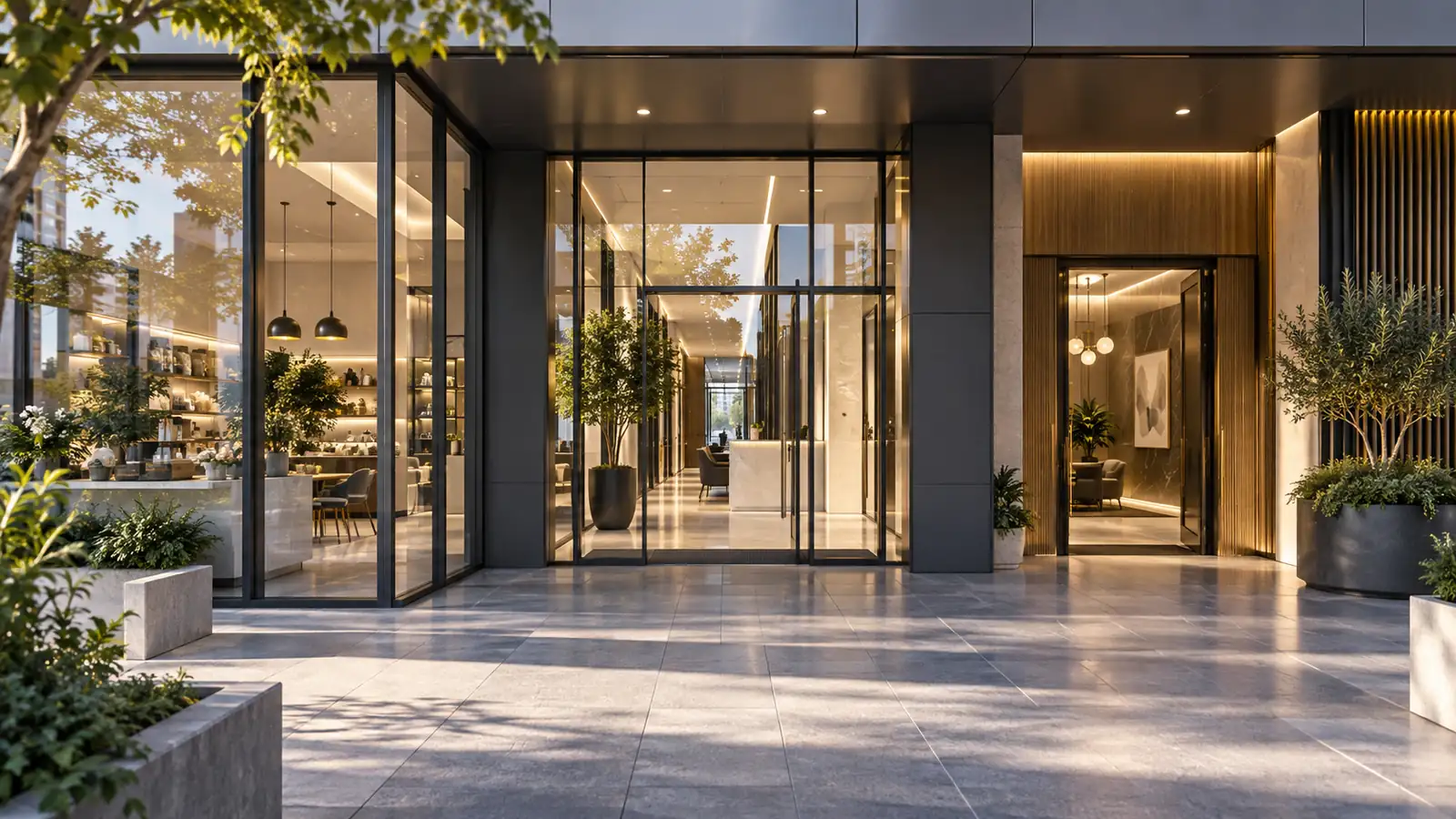
Commercial strata cleaning at a Melbourne mixed-use entry with retail podium and office lobby
3audiences, one schedule
1report to the manager
Splitinvoices where needed

This page is for building managers, facility managers and owners corporation committees responsible for business premises on a strata plan. It is written for people who have to answer to tenants as well as owners, and who need the cleaning to be invisible during business hours. That includes a row of small offices in an older CBD building, a suburban medical centre divided into suites, a shopping strip with apartments above, and the podium levels of a Docklands tower where cafes, gyms and a residential lobby share one entrance.

Cleaning a commercial scheme is closer to office cleaning than to apartment cleaning in some ways, and very different in others. The spaces are busier during the day, the expectations are set by tenants who pay rent, and the decisions still run through an owners corporation. We clean these buildings to a schedule built around all of that. Commercial work is one of the scopes listed in our strata cleaning services, and it runs under the same contract, reporting and invoicing as the rest.

01Scope

What does commercial strata cleaning include?

Commercial strata cleaning includes the shared entries, lift lobbies, corridors, amenities, loading areas and podium frontages of business premises held under strata title. Tenants and lot owners clean inside their own suites; the owners corporation pays for everything they share.

That line between shared and private matters more in commercial buildings than in homes. A tenant may reasonably expect the corridor outside their office to be clean and dry by 8.30 am, but the kitchenette inside the suite is theirs to arrange. We map the boundary on the walk-through so nobody pays twice or assumes the other party has it covered.

Commercial scheme types and what they usually share
Scheme typeTypical shared areasWhat drives the schedule
Office strataEntry, lifts, corridors, shared toilets, kitchenettes on some floorsClean before 8 am, amenities checked at lunch
Retail strataWalkways, shopfront glass, centre toilets, bin enclosureFinished before trade opens
Mixed-use towerPodium, separate lobbies per use, loading dock, basementsThree sets of hours at once
Medical and professional suitesWaiting areas, lifts, accessible toilets, corridorsClinic hours and touch-point hygiene
Strata industrial unitsDriveways, shared toilets, bin bays, gatehouseTruck movements and weather

Melbourne has a lot of small commercial strata that never looks like a big building. Older CBD buildings around Flinders Lane and Little Collins Street were split into office suites decades ago and still run on one slow lift and a shared toilet on each floor. Suburban strips in places like Camberwell and Moonee Ponds have shops at street level and offices or apartments above. Each needs a light, regular routine rather than an office-tower contract.

In commercial schemes the cleaning bill often travels one step further. Owners corporation fees are commonly passed on to tenants as outgoings under their leases, so tenants may be the people who ask to see what they are paying for. Clear visit reports help the owner answer that question without a site visit.

Strata industrial estates are the quiet end of the market. A block of twenty warehouse units in Dandenong South or Tullamarine may share nothing more than a driveway, a gatehouse, a toilet block and a bin compound. They rarely need weekly cleaning, but they do need someone to clear windblown rubbish, hose down the bin area and keep the shared toilets usable, usually on a fortnightly round.

Occasionally we are asked about a school or childcare centre on a strata plan. Where it is genuinely part of a strata scheme, it is treated like any other commercial lot: we clean the shared areas around it, and the operator arranges cleaning inside.

02One building, three clocks

How do you schedule cleaning in a mixed-use scheme?

By working backwards from each group's busy hours. Retail areas are finished before shops open, office lobbies before staff arrive, and residential areas at a sociable hour mid-morning. Amenities get a second pass in the afternoon. The result is one schedule that no group notices.

The times shift with the building. A cafe that opens at 6 am pushes the podium clean earlier; a medical centre on level one may want its lift lobby done before the first patient at 7.30. Residents on the podium levels of towers in Southbank and Docklands are often the most sensitive to noise, because their bedrooms sit directly above the retail entry. We use battery machines and leave the loudest jobs for after 8 am.

The calendar matters as much as the clock. Late-night trading on Thursdays and Fridays leaves the podium busier than usual the next morning. Public holidays shut the offices but not the cafes. Christmas brings more deliveries, more cardboard and more rubbish in the loading dock. We plan those weeks in advance with the manager instead of reacting to them.

Mixed-use buildings also carry three sets of expectations about what clean means. Retailers care about the shopfront and the walkway in front of it. Offices care about the lobby, the lifts and the toilets. Residents care about their own entry, the mail area and the bins. Each group gets a named contact in our reports, so a complaint from one does not get lost among the others.

What goes wrong without a shared schedule. A floor scrubber runs through the podium at 7.15 am while the cafe is setting up its tables. The office lobby is mopped at 8.45 am, just as two hundred people walk through it. The residential corridors are vacuumed at 7 am on a Saturday. None of these is a cleaning failure in the usual sense. They are timing failures, and they generate more complaints than a missed corner ever will.
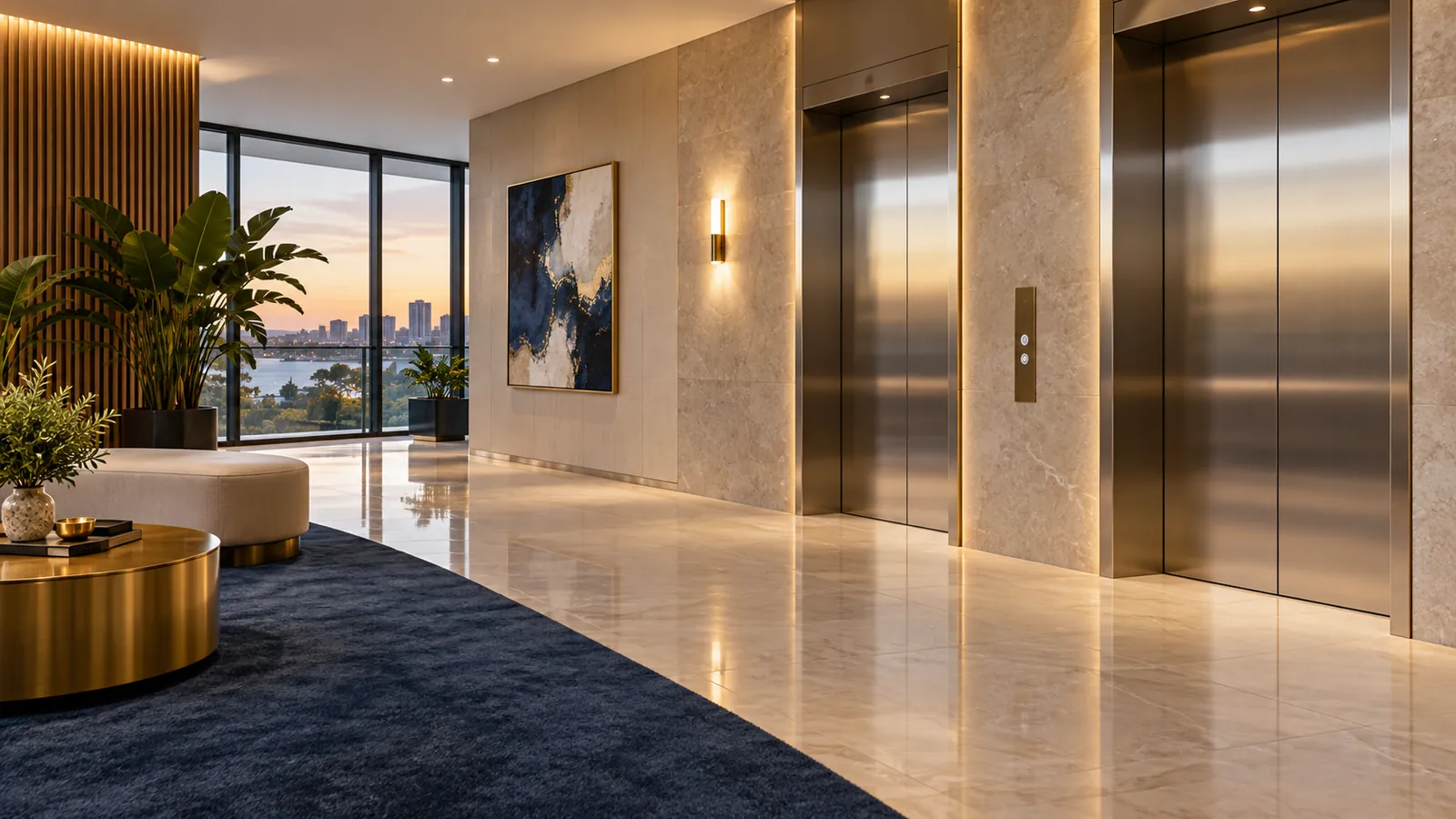
Stainless lift doors and stone floor in a shared commercial strata lift lobby

03Front of house

How are shared entries, lifts and podiums kept presentable?

Shared entries and lift lobbies are cleaned first on every visit because they carry the most people. Podium walkways and shopfront glass are done early, before foot traffic builds, and touch points are wiped again in the afternoon in busy buildings.

  • Entry glass, directory boards and intercoms
  • Lift cars, buttons, mirrors and door tracks
  • Podium walkways, planters and seating edges
  • Accessible toilets and parents' rooms where shared

Podium paving takes a beating from coffee, chewing gum and delivery trolleys. Daily sweeping handles most of it; spills are spot cleaned the same morning. Twice a year the whole podium benefits from a machine wash, which we book through our strata pressure cleaning team at a time the retailers agree to.

Awnings and ledges above shopfronts in the CBD attract pigeons, and their droppings land on the paving and glass below. We clean the ground-level mess daily where it is a problem and report it to the manager, because deterrents are a building maintenance decision rather than a cleaning one.

Lifts in office strata see a sharp peak between 8.30 and 9.15 am and again after lunch. Buttons and handrails are the most touched surfaces in the building at those times, so in busy schemes we add a short midday wipe of lift cars and lobby touch points rather than relying on the early-morning clean alone.

Directory boards and tenant signage are wiped but never moved or altered, and any damage is reported rather than repaired. Those belong to the owners corporation or to individual tenants, and we leave the decision with them.

04Back of house

What about end-of-trip facilities and loading areas?

End-of-trip facilities need daily cleaning of showers, change rooms and lockers because they are used every morning. Loading docks and service corridors need regular sweeping, degreasing and waste control, because that is where smells and pests start in a commercial building.

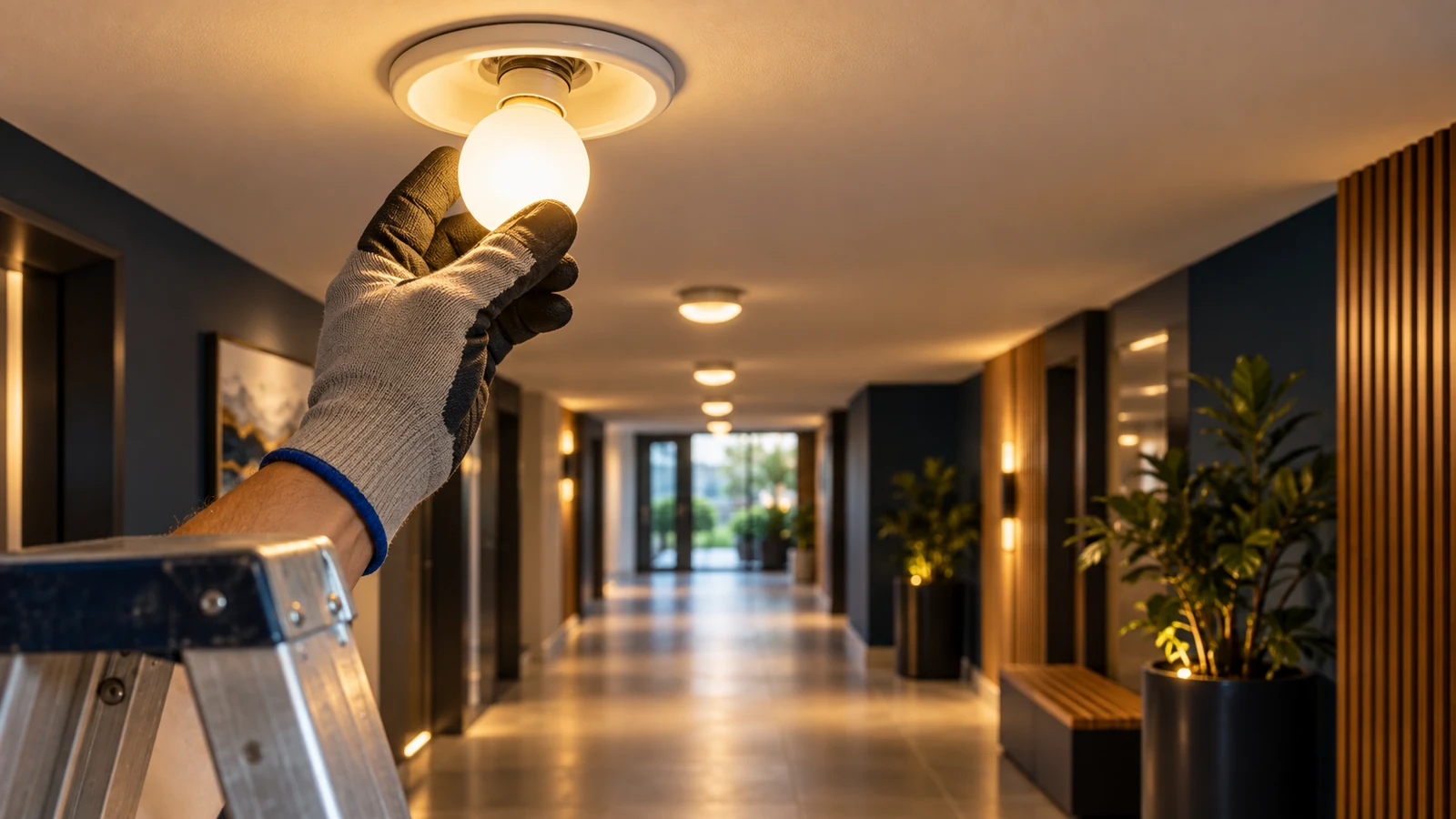
Service corridor lighting checked during a commercial strata cleaning round

End-of-trip facilities

Showers, change rooms, lockers and bike storage are now standard in newer CBD office buildings. They are used hard between 7 and 9 am, then sit wet for the rest of the day.

  • Showers and floors cleaned and dried daily
  • Benches, lockers and mirrors wiped
  • Soap and paper restocked from owners corporation supplies
  • Drains checked for hair build-up

Lost property turns up here more than anywhere else: towels, shoes, the odd bike lock. We bag it, label it with the date and leave it where the building manager asks, rather than throwing it out.

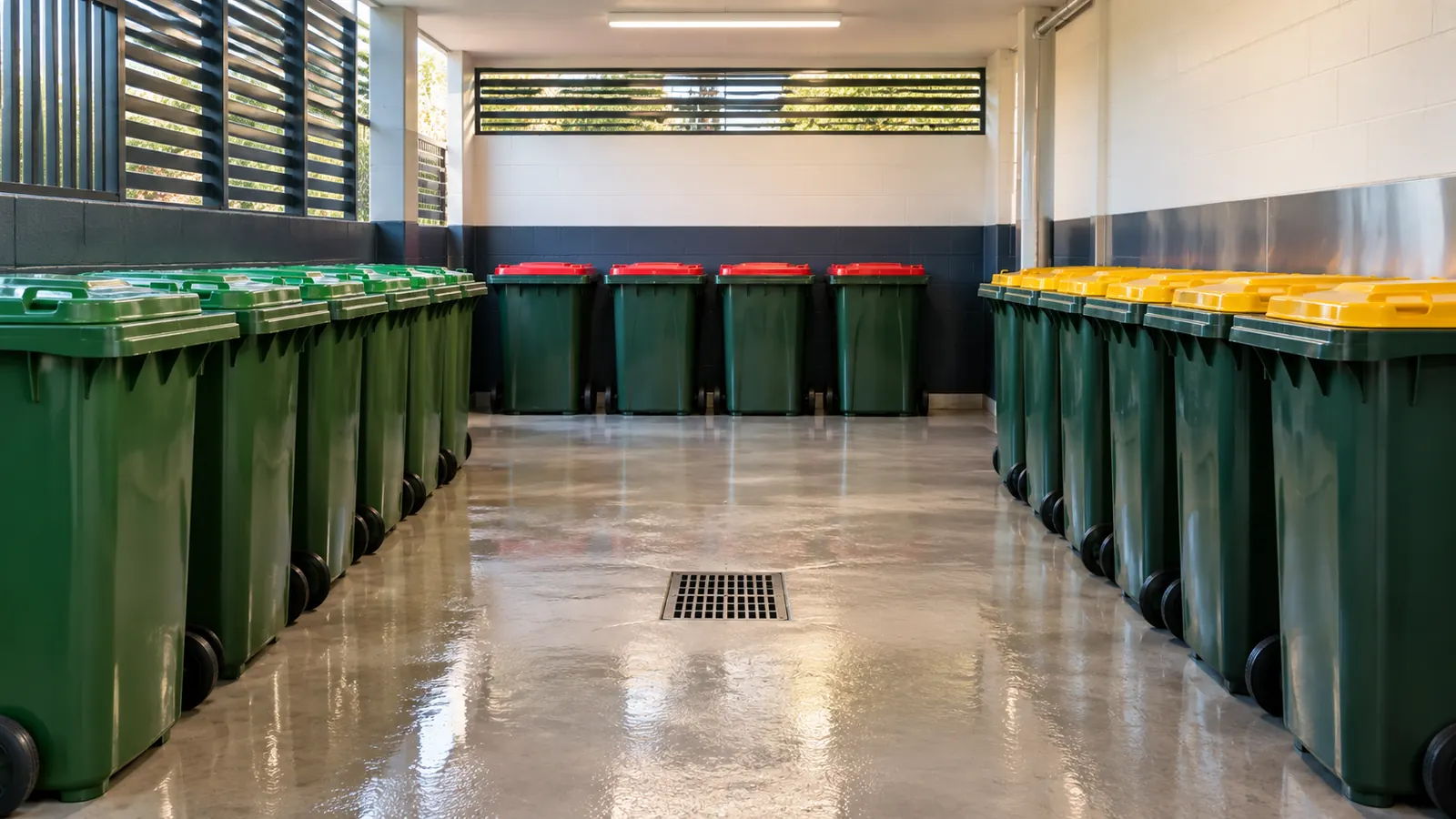
Basement loading area and carpark aisle freshly scrubbed in a commercial building

Loading areas and service corridors

Delivery pallets, commercial bins and cardboard compactors make these the dirtiest spaces in the building. Nobody sees them, but everybody smells them when they are neglected.

  • Dock floor swept and degreased
  • Bin enclosures washed down
  • Service lift floor and walls cleaned
  • Spills from deliveries reported the same day

Food tenants change the picture again. A podium with two cafes and a sushi bar produces grease, food scraps and a steady stream of cardboard. If bins are left open or the dock floor is not degreased, cockroaches and rats follow quickly. We keep commercial bin enclosures on at least a weekly wash, report overflowing or wrongly sorted waste to the manager, and flag grease on shared surfaces so the tenant responsible can be asked to deal with it at the source.

Commercial basements often double as tenant parking and loading access, and they collect oil, tyre dust and leaves blown down the ramp. Those are covered by our carpark and basement cleaning routine, usually a monthly sweep with a machine scrub every quarter.

05Workflow

How do we work with building managers?

The building manager gets one scope, one contact and one report per visit. We agree access and induction at the start, follow their contractor rules on site, and route anything outside our scope back to them with a photo, rather than straight to tenants.

  1. Induction

    Site rules, sign-in process, fire exits, chemical storage and after-hours alarms walked through with the manager.

  2. Agreed scope

    Every shared area listed with its frequency and time window, signed off before the first clean.

  3. Visit reports

    Dated photos of each area, plus anything we found that needs a trade, sent the same day.

  4. Monthly review

    A short call or email to adjust hours, add a scope or respond to tenant feedback.

Podium entry photographed after the pre-trade clean
Podium entry 6.10
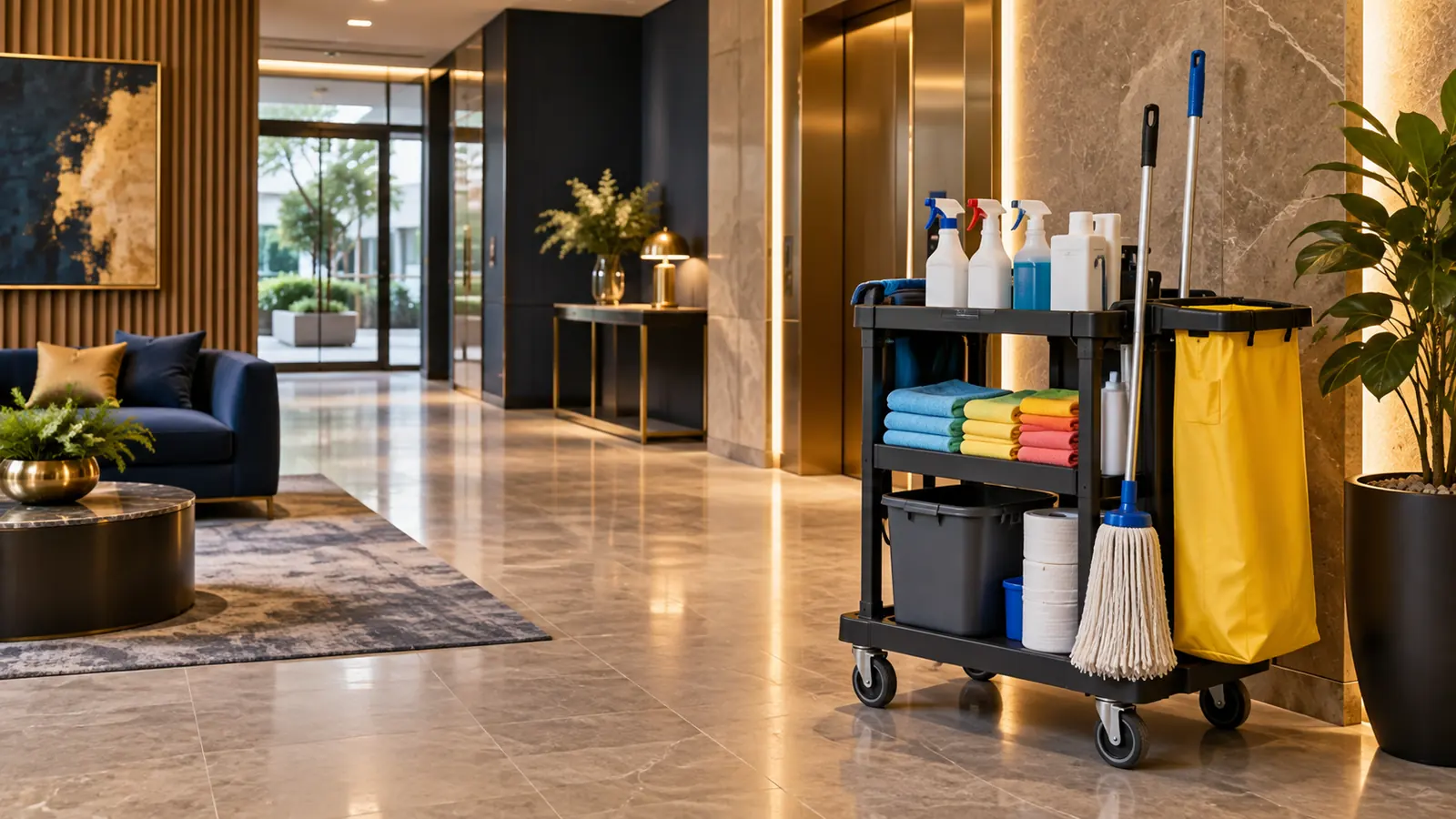
Cleaning trolley staged in the office lobby before staff arrive
Office lobby 7.05
Commercial bin enclosure washed down with bins lined up
Bin enclosure 9.40

Once a month the visit reports roll up into a one-page summary for the owners corporation: visits completed, hours on site, issues reported to the manager and how each was resolved. Committees in commercial schemes meet less often than residential ones, so that page is usually what gets tabled at the meeting.

After-hours work in commercial buildings brings its own rules. Our crews sign in and out through whatever system the building uses, arm and disarm alarms only as instructed, and never prop doors open while carrying bins or equipment. Keys and access cards are logged on a signed register. Where CCTV covers the areas we clean, the building manager has a record of every visit alongside our report.

Tenants will sometimes ask our crew to do something extra, like vacuum inside a suite or move furniture. Our crew politely declines and passes the request to the manager, who can approve it as a separate job. That keeps the owners corporation from paying for private work and keeps the contract clean. Managers looking after several buildings will find the portfolio setup in our section written for strata and owners corporation managers.

06Pricing

How is commercial strata cleaning priced?

Commercial strata cleaning is priced from the hours each area needs, the time windows it has to fit into and how many times a week it is visited. Early-morning podium work and daily amenities cost more than a weekly residential round, and the quote shows each of those as a line.

Mixed-use sites raise one more question: who pays for what. Each lot's share of owners corporation costs follows its lot liability on the plan of subdivision, and many larger sites have separate owners corporations for the retail, office and residential sections. We price and invoice each area separately so the costs land where the plan says they should.

Example of how a mixed-use cleaning quote can be split
AreaBilled toVisit pattern
Podium walkways and shopfront glassRetail owners corporationDaily, before 7 am
Office lobby, lifts and toiletsOffice owners corporationDaily, plus afternoon amenities check
Residential lobby and corridorsResidential owners corporationThree times a week
Loading dock and shared basementWhole-site owners corporationWeekly sweep, quarterly scrub

To see why two quotes for the same building can differ, compare the hours. One contractor may allow three hours a day for a mixed-use podium and lobby; another may allow five. The cheaper quote is not wrong on its own terms, but by the third week the afternoon amenities check is usually the first thing to go. Ask each contractor to show the hours behind the number.

Consumables are the other line committees ask about. Toilet paper, hand towels and soap for shared amenities can be supplied by us and charged at cost on the monthly invoice, or bought by the owners corporation and stocked by our crew. Either works; what matters is that the quote says which, so stock does not run out between two parties each assuming the other had it.

The example is illustrative; your plan of subdivision decides the real split. For worked figures by building size, see our page on strata cleaning cost.

Lot liability and owners corporations: Consumer Affairs Victoria, owners corporation definitions.

07Your quote

What do we need to quote your commercial building?

The building type, number of levels and lifts, the uses sharing the site, trading and business hours, and whether there is more than one owners corporation. With that we can plan a walk-through and return a quote split the way your plan requires.

If you have a current cleaning specification or tenant complaints log, send it. It tells us more about what the building needs than any walk-through can. Existing contractors do not need to know you are asking; we can visit as a routine inspection with the building manager.

Walk-throughs for commercial buildings work best at the time the cleaning will actually happen. Seeing the podium at 6 am, or the loading dock at 10 am on a delivery day, shows problems that a quiet mid-afternoon inspection hides. We will arrange a second, shorter visit at that hour if the first one is not enough.

Changing from an existing cleaner is usually simpler than committees expect. Most contracts carry a notice period of 30 to 90 days. We plan the handover to start the day after the old contract ends, walk the building with the manager in the final week, and run the first two weeks with extra supervision so tenants notice the change for the right reasons.

When you are ready, get a quote through the full form, or start with the three details below. For our wider work across the city, including residential schemes, see strata cleaning Melbourne.

08Questions

What do building managers ask us?

Three questions that come up on almost every commercial walk-through.

Can you clean before retail opens and after offices close?
Yes. Podium walkways and shopfront glass are usually finished before 7 am, and office toilets and lobbies can be done again after 6 pm if the building needs it. Split shifts cost a little more than a single visit, and the quote shows that clearly as its own line.
Do you coordinate with our building manager?
Yes, the building manager is our main contact. We follow their site rules and induction, send visit reports to them, and pass tenant requests and maintenance problems back to them rather than acting on our own. Committees can be copied on reports if they want to see them.
Do you handle strata-titled offices?
Yes. We clean the shared parts of office buildings divided into strata lots, from a handful of suites above a shopfront to multi-level buildings with their own lift banks. Suite interiors are arranged by each owner or tenant and can be quoted separately if they ask.