
Stairs, laundry, carport
No lift, two or three stairwells, a shared laundry and open carports. Stairs carry every trip, so they are cleaned like a foyer, including walls where shopping bags rub.
OC · StrataCommon property cleaning for Melbourne owners corporations and body corporates
02East region
Strata cleaning in the eastern suburbs is mostly about stairs, trees and long-standing committees. Brick walk-ups from Hawthorn to Ringwood, boutique blocks on quiet streets and newer mid-rise near the train lines each need a steady, careful routine rather than a big-building contract.
This page is for committee members and managers of apartment blocks and small schemes in Melbourne's east, from the inner-east streets of Hawthorn and Kew out through Camberwell, Box Hill and Doncaster to Ringwood and Croydon. It covers the buildings typical of the area, the jobs they need most and how we work with committees that often manage themselves. To compare the other regions, visit areas we serve across Melbourne.
01Coverage east
Our strata cleaning in the eastern suburbs runs from the Yarra at Hawthorn and Kew east along the Belgrave and Lilydale lines to Ringwood and Croydon, and north-east through Balwyn and Doncaster. Suburbs like Surrey Hills, Blackburn, Mitcham and Nunawading sit on the same rounds.
The inner east and the outer east feel quite different. Hawthorn and Kew have dense streets of older flats close together; Ringwood and Croydon have more townhouse groups and newer blocks spread along main roads. Both are covered, but visit days are planned differently for each.
Distances are longer than in the city, so we group buildings along the main roads and train lines. A crew might clean three Hawthorn blocks and one in Camberwell on a single morning, then cover Box Hill in the afternoon.
02Local stock
Three-storey brick walk-ups from the 1960s to the 80s make up much of the older stock, alongside boutique blocks of eight to twenty lots and a newer wave of mid-rise and high-rise apartments around stations and shopping centres, with Box Hill the clearest example.
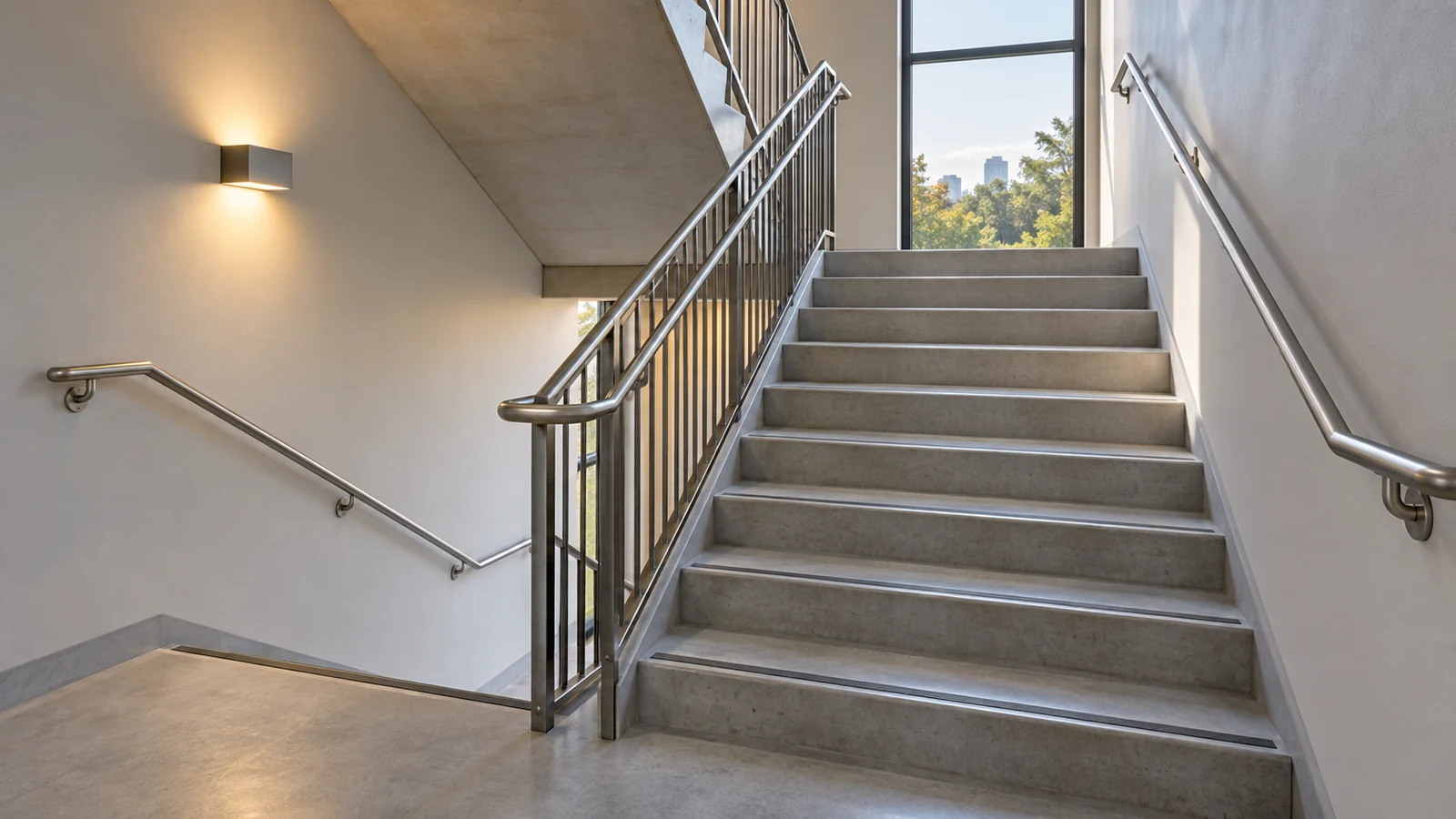
No lift, two or three stairwells, a shared laundry and open carports. Stairs carry every trip, so they are cleaned like a foyer, including walls where shopping bags rub.
Eight to twenty lots, often owner-occupied, with a garden the owners care about. Presentation of the entry and letterboxes matters most.
Newer buildings near Box Hill, Camberwell and Ringwood stations, with lifts, basements and busy parcel rooms. They need the full indoor routine.
Many older blocks have terrazzo or quarry-tiled stairs and landings. Those surfaces look superb when cleaned with a neutral product and dull quickly under harsh ones, so the product choice is written into the checklist from the first visit.
Carports and open parking areas are common behind walk-ups here. They collect leaves, oil and the odd dumped item, and they are often the first thing a visitor sees when arriving from the back lane, so they get a sweep on the routine visit rather than being left to a yearly wash.
Heritage overlays cover parts of Hawthorn, Kew and Camberwell, and some blocks have original features such as timber handrails, leadlight entry doors and brass letterbox plates. We treat those like the assets they are: no abrasive pads on the timber, no ammonia on the brass.
03Work booked
Weekly stairwell and entry cleaning, gutters two or three times a year because of the trees, path and driveway washes for moss, and tidy bin areas. Carpets are less common here than in the city, but where corridors are carpeted, a yearly extraction usually follows.
| Scope | Why it matters here | Usual frequency |
|---|---|---|
| Stairwells and entries | No lift, so stairs take all the traffic | Weekly |
| Gutters and downpipes | Mature oaks, elms and gums overhang roofs | Two or three times a year |
| Paths and driveways | Shade and leaf litter grow moss | Once or twice a year |
| Bin area | Open-air bays behind the building | Tidy weekly, wash monthly |
| Shared laundry | Lint, detergent spills, dusty machines | Weekly wipe, monthly detail |
Double-storey and three-storey walk-ups mean most gutter work here is above the two-metre mark WorkSafe Victoria uses for high risk work, so every roof visit is planned with a written safe work method statement, secured ladders or roof anchors, and a second person on the ground.
The two-metre threshold comes from WorkSafe Victoria's SWMS guidance, reviewed for this page in September 2026.
Autumn is the busiest season here. Leaves fill gutters, block drains at the bottom of driveways and blow into stairwell entries. Many committees ask us to add a visit or two in April and May, then return to the usual rhythm in winter.
04How committees work here
Hands-on committees, often without a professional manager, where owners have lived in the building for years and notice small changes. They value a cleaner who reports clearly, keeps the same crew and asks before changing anything in the garden or common rooms.
Smaller schemes may have no manager, so reports and invoices go straight to the committee secretary or treasurer.
Many blocks have owner-tended gardens; we sweep paths and edges but never prune or remove plants without asking.
Older buildings often run on physical keys; each one is logged and never labelled with the address.
More retirees and home workers means more people around during visits, so quiet and wet-floor care matter.
Shared laundries are a feature of older blocks that newer buildings rarely have. Lint builds up behind machines, detergent drips dry onto the floor and the room can smell damp in winter. A weekly wipe and a monthly move-and-clean behind the machines keep it pleasant, and we report any leaking hose to the committee.
Change is handled gently. If a committee wants to try a new visit day or a different product in the stairwells, we trial it for a month and report back before making it permanent. Long-standing owners appreciate being asked, and it avoids complaints from residents who were used to the old way.
Decisions can take a little longer when a volunteer committee meets only a few times a year. We plan for that by sending quotes that can be approved by email between meetings, and by giving the committee a simple one-page summary each quarter.
05Quote
The address or suburb, number of lots and stairwells, whether there is a lift, and anything seasonal you already know about, such as a gutter that overflows every autumn. We arrange a walk-through with a committee member and follow it with a fixed, itemised quote.
A good time to ask is late summer, before the autumn leaf drop, so gutters and the first extra visits can be approved in time.
Small schemes of four to eight lots are welcome. A short fortnightly or monthly visit, with gutters twice a year, is often all a small block in the east needs, and the quote will say so rather than push a bigger scope.
If gutters are a worry, ask for them to be quoted with the routine clean so they can be booked before the leaves drop. Our strata cleaning cost page shows how a typical walk-up is priced line by line. To send photos, get a quote through the full form. Everything we clean is listed on strata cleaning Melbourne.
06East questions
Three questions from committees between the Yarra and the Dandenongs.