

Podiums and courtyards
Gum, coffee and tyre marks from trolleys. We use a rotary surface cleaner so water does not blast into shopfronts, and start before trading so tiles dry by opening.
OC · StrataCommon property cleaning for Melbourne owners corporations and body corporates
S06Hard surfaces
Strata pressure cleaning brings shared paths, driveways, podium tiles, bin areas and ground-level walls back to their original colour, and takes the slippery green film off shaded paths before someone falls. Every surface gets the method it can handle, from full pressure on concrete to a gentle soft wash on render.
PPaths and drivewaysTPodium tilesWGround-level walls

This page is for committees and managers deciding whether the outside of their scheme needs a proper clean, and for anyone who has watched a contractor strip paint off a wall with a pressure washer and wants to avoid it happening again. It covers what schemes usually pressure clean, the slip risk on shaded paths, how different surfaces are treated, where the water goes and what it costs. It is one of the periodic jobs in our strata cleaning services, normally booked once or twice a year.
01Where it applies
Schemes most often book strata pressure cleaning for entry paths and front steps, shared driveways, visitor parking, podium and courtyard tiles, pool surrounds, bin enclosures and the lower parts of rendered or brick walls. In short, the hard surfaces everyone walks on or past at ground level.
These surfaces age slowly, so nobody notices until the difference is dramatic. A concrete driveway goes from pale grey to charcoal over five years. Pavers under a gum tree turn green along the joints. The render beside the bin enclosure gets a brown tide mark from splashes. One clean usually shows the committee how far things had drifted.
In Melbourne the pattern is predictable. Paths on the south side of a building get no winter sun and stay damp from May to September, so moss and algae grow. Driveways under street trees collect sap, leaf stains and bird droppings. Podiums near cafes collect gum and coffee. Each needs a slightly different approach, which is why we inspect before quoting.
Basement floors are the exception. Underground, water has nowhere safe to go, so those are machine scrubbed with water recovery under our carpark and basement cleaning service instead.
02Slip risk
Shaded paths grow algae and moss, which turn slick as soon as they are wet. Pressure cleaning removes the growth down to the surface, and a follow-up treatment slows it coming back. For an older resident or a parent with a pram, that film is a genuine fall risk.
Stay damp for months and grow a green film first, often along the edge of the building.
Leaf litter holds moisture on the surface and feeds moss in the joints of pavers.
A leaking downpipe or overflowing gutter keeps one patch wet all year.
Cleaning alone fixes the surface, not the cause. If one patch goes green every year because a downpipe spills onto it, the report says so, and fixing the gutter will save the scheme a cleaning bill. Where there is no simple fix, many schemes book the shaded paths twice a year, before and after winter, and the rest of the site once.
After an algae clean the surface is noticeably less slippery, but no cleaning method turns a smooth tile into a non-slip one. If a path is naturally slippery when wet, the committee may want advice on a slip-resistant treatment, which is a separate trade decision.
03Beyond the path
Podium tiles are cleaned with a surface cleaner that keeps the spray contained, bin areas are degreased before washing, and walls are soft washed from the bottom up to avoid streaking. Each area is done at a time that suits the people using it.
Gum, coffee and tyre marks from trolleys. We use a rotary surface cleaner so water does not blast into shopfronts, and start before trading so tiles dry by opening.
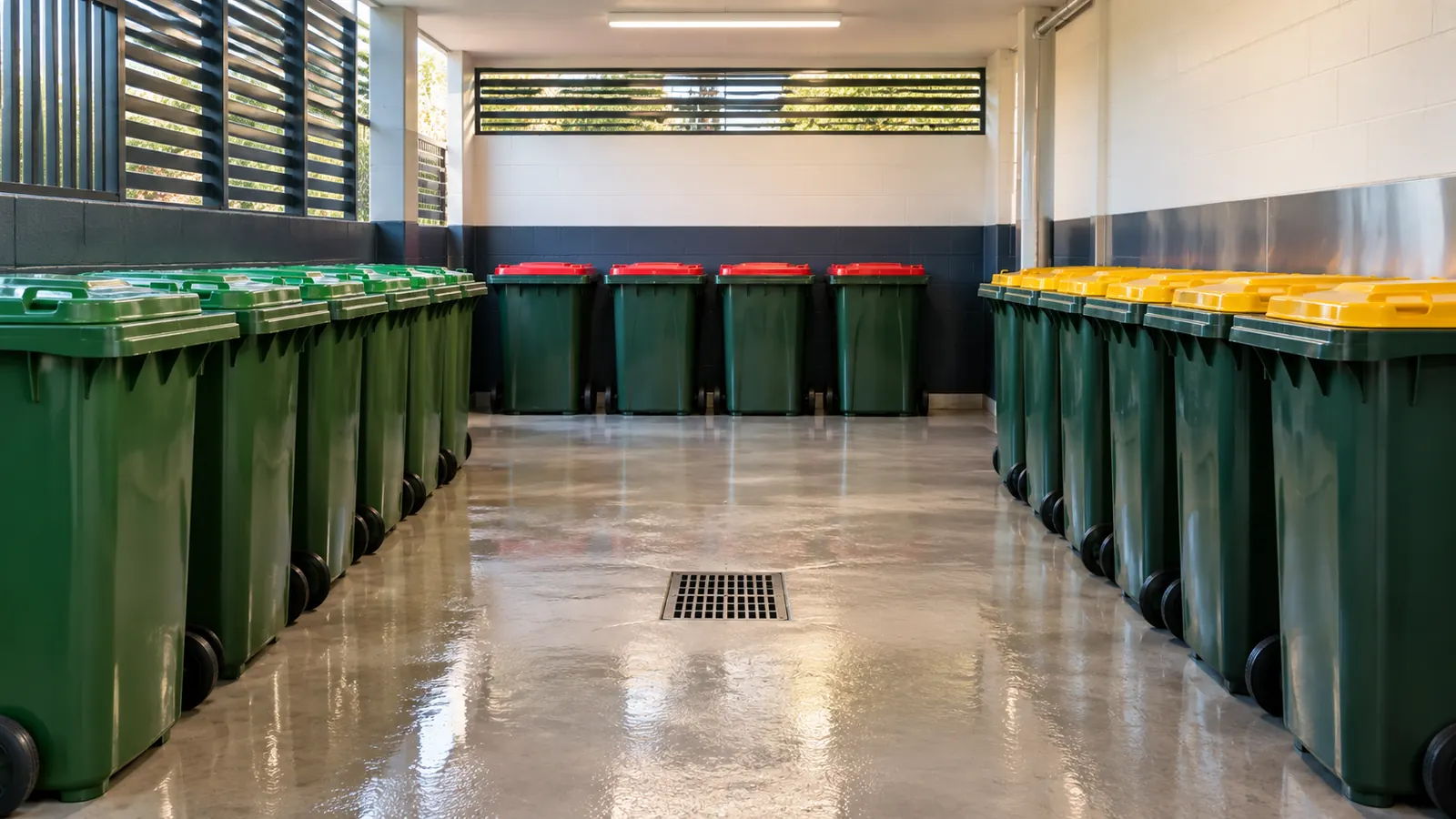
Grease and food residue are broken down first so the wash lifts them rather than spreading them. Wash water is directed to a sewer drain or collected.
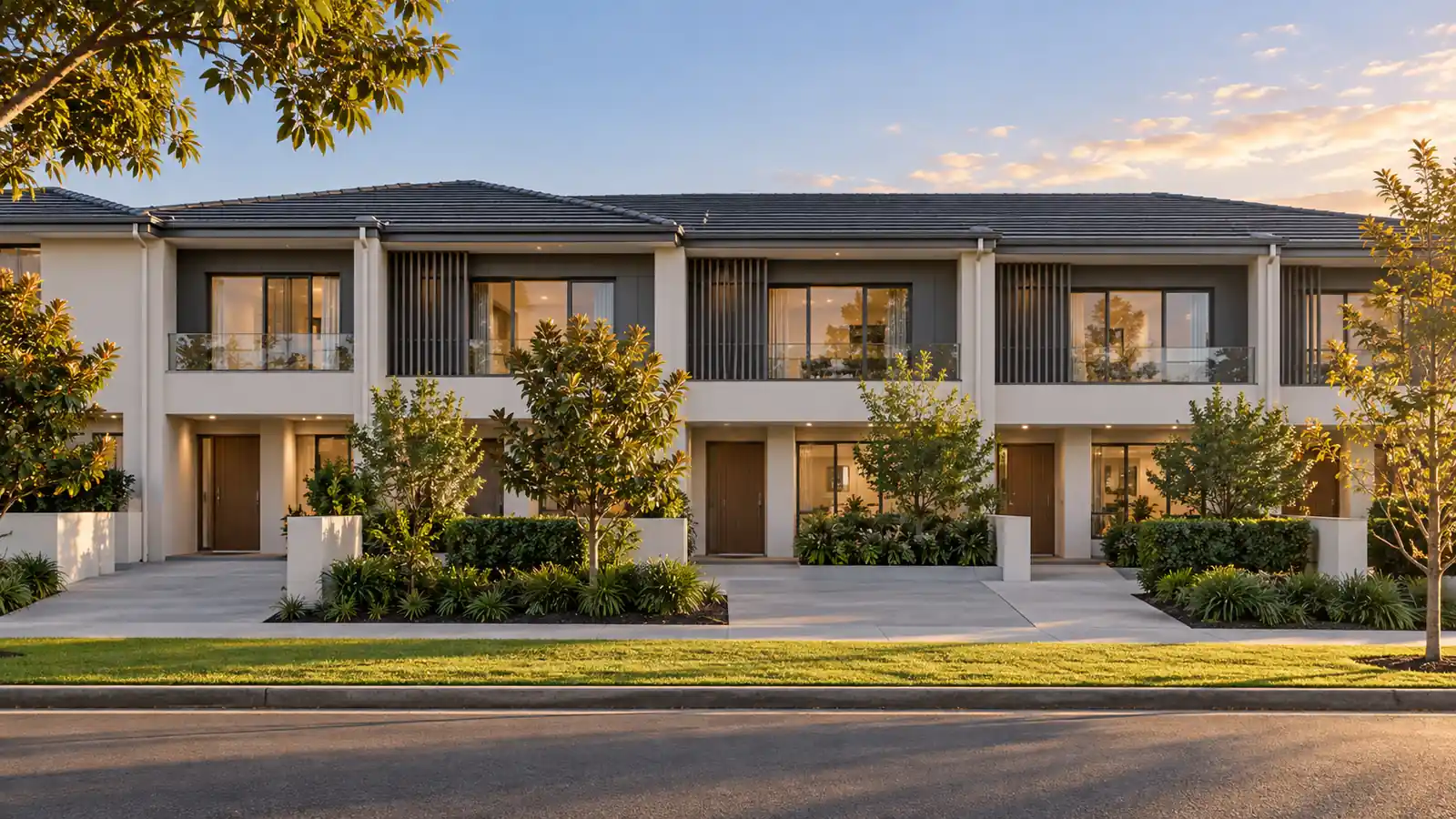
Tyre marks, oil drips and tree stains on concrete, plus a soft wash of render and brick up to about head height from the ground.
Glass and window frames beside these surfaces get splashed during a wash. We rinse them at the end, but a proper glass clean is a separate job, often booked the same week through our strata window cleaning team so both finish together.
04Surface honesty
High pressure suits hard, sealed surfaces like concrete and most pavers. Render, painted surfaces, soft stone and timber need a soft wash: low pressure with a cleaning solution that does the work. Using full pressure on the wrong surface can etch it, strip paint or force water behind it.
| Surface | Method | What we watch for |
|---|---|---|
| Concrete driveways and paths | Pressure | Surface cleaner to avoid striping; oil pre-treated first |
| Clay and concrete pavers | Pressure | Joint sand washing out; resanding may be advised |
| Stone and porcelain tiles | Low pressure | Grout lines and softer stone that can etch |
| Render and painted walls | Soft wash | Flaking paint, hairline cracks, water behind render |
| Brick walls and fences | Low pressure | Old mortar that crumbles, efflorescence stains |
| Timber decks and screens | Soft wash | Raised grain and furring from too much pressure |
We test an out-of-the-way patch before starting on anything we have not cleaned before. If paint is already flaking or render is cracked, the report shows it before we begin, so nobody later blames the wash for damage that was already there.
05Wash water
Plain water rinsing dust off a path can usually run to garden beds. Water carrying detergent, oil, grease or paint flakes is kept out of stormwater pits: directed to a sewer drain, contained with a bund and vacuumed up, or captured with a recovery machine. The method depends on the site.
Dust and leaf residue with no chemicals, spread over lawn or beds rather than the gutter.
Bin areas and oily driveways, with drains covered and water vacuumed or sent to a sewer point.
Stormwater grates protected before work starts, so nothing reaches the street system.
EPA Victoria places a general duty on everyone to keep waste out of the stormwater system wherever it is reasonably practicable to do so. Stormwater in Melbourne runs to creeks and Port Phillip Bay without treatment, so a driveway degrease hosed into the street pit is a small pollution event. We plan each job so that does not happen, and note in the report how water was handled.
Source: EPA Victoria, stormwater. Checked September 2026.
06Pricing and limits
Pressure cleaning is priced by area and surface type, with extra time for oil treatment, water recovery and soft washing. Most schemes book it as a yearly or twice-yearly line in their cleaning calendar. Full facades and work above ground level are quoted separately, or referred, rather than squeezed into this job.
Committees sometimes ask whether to buy a pressure washer and let a volunteer do the paths. For a small patch, perhaps. For a whole scheme, the risks add up quickly: damaged render, water forced under doors, a slip on wet algae and runoff in the street pit, all on the owners corporation's insurance. A contractor carries the equipment, the method and the cover.
A townhouse group with one long driveway and a few paths is often done in half a day. A mixed-use podium with tiles, planters and a bin enclosure can take a full day, split across early mornings so retailers are not disturbed. Heavily stained or long-neglected surfaces cost more the first time; after that, a regular clean keeps them cheaper to maintain.
High-rise facade cleaning, balcony soffits above the ground floor and anything needing rope access, an elevating work platform or scaffolding. Those are specialist height jobs with their own safety planning. On the walk-through we say plainly whether access-qualified partners can take them on, or whether a dedicated facade contractor is the better call.
For whole-building figures, including how periodic jobs sit alongside the routine clean, see strata cleaning cost.
07Booking
Send us the surfaces you want cleaned, a rough area or a few photos, and the suburb. We inspect, check surfaces and drains, then quote a date that avoids rain and suits residents. Notices go up a week ahead so cars and bikes can be moved.
On the day, the crew starts with the areas residents need first, usually the entry path and front steps, so the main way in is dry again quickly. Doormats, pot plants and outdoor furniture on common property are moved and put back, and anything that belongs to a resident is left where it is.
Late spring and early summer are the most popular times, once surfaces dry quickly and the autumn gutter clean has cleared the roofs. Booking early in the season makes it easier to get a date that suits the building. When you are ready, get a quote with photos through the full form, or start below. Other outside scopes, such as gutters and glass, are listed on strata cleaning Melbourne.
08Before you book
Short answers to the three things committees check before approving a wash.